Overnight Ticket Coverage for US MSPs: How an Offshore L1 Technician Ends the 2 A.M. Phone Call
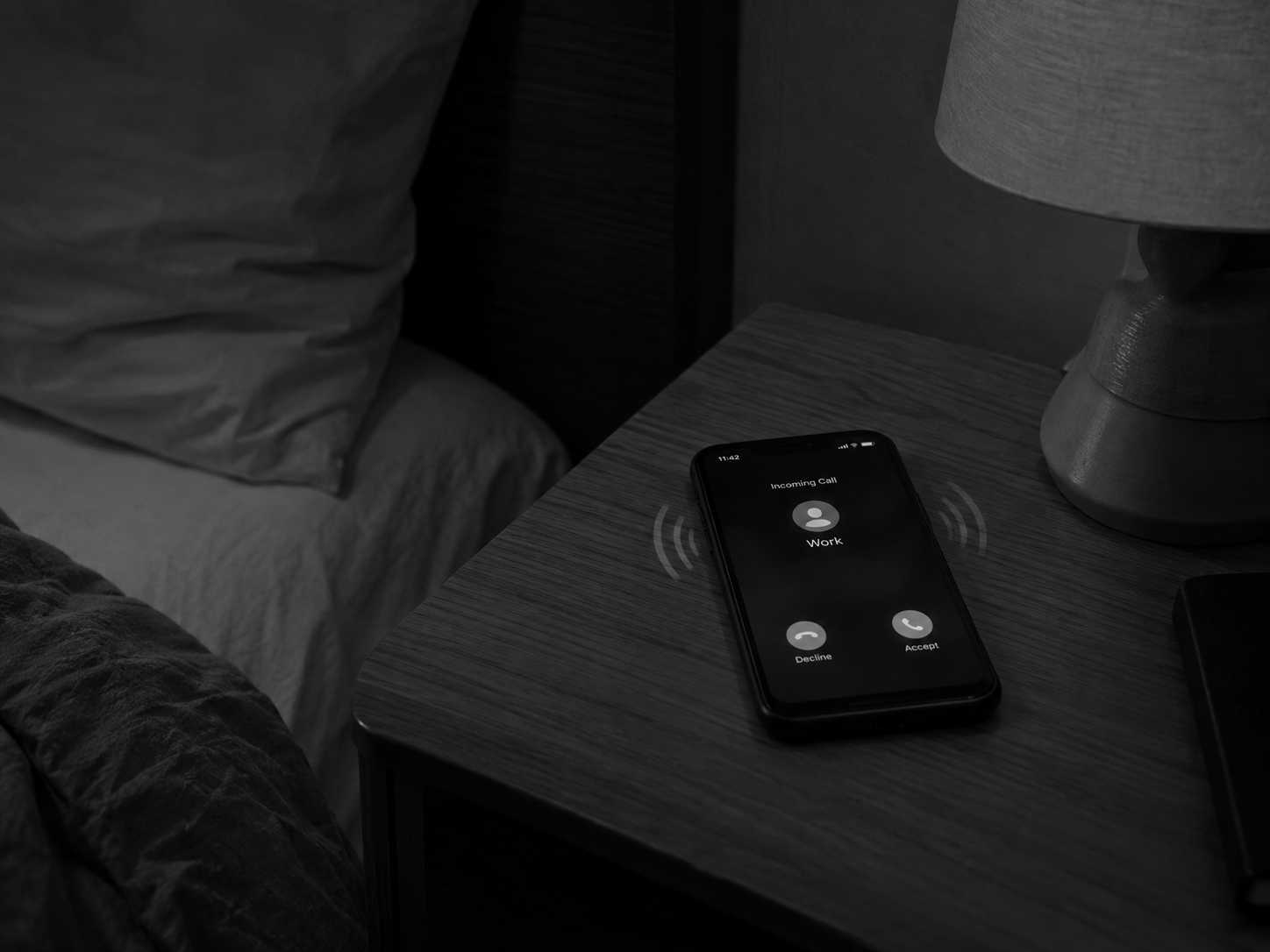
Your phone buzzes at 1:47 a.m. Eastern. A user at a client's dental office is locked out of Microsoft 365, the practice opens at 7:30, and the ticket has been sitting in your PSA for forty minutes because nobody on your team is awake to see it. You are awake now. You are also the only person who can fix it, and in a few hours you are supposed to be running a business rather than resetting passwords. If you own a US managed service provider with somewhere between two and thirty people, some version of that night is probably familiar.
Why Hiring Your Way Out of Overnight Coverage Keeps Failing
The instinctive fix is to hire a technician for nights. The market is not making that easy. Kaseya's 2026 State of the MSP Report, a survey of more than 1,000 managed service providers released in April 2026, found that 16 percent of respondents reported difficulty hiring skilled technicians, up from 9 percent a year earlier. Sixteen percent is not a majority, and it would be dishonest to claim most MSPs are in crisis. The more useful reading is the direction: the figure nearly doubled in one year, and Kaseya's own respondents said their management tools are working well, with 83 percent saying those tools significantly improve efficiency. The constraint is people, not software.
The federal labor data adds a second angle. The US Bureau of Labor Statistics reports a May 2024 median wage of $60,340 for computer user support specialists, and projects that employment in the occupation will decline 3 percent between 2024 and 2034, with roughly 50,500 openings a year that all come from replacing people who leave or change careers. BLS does not explain why the occupation is projected to shrink, and its category covers general support work rather than MSP overnight shifts specifically, so treat it as a rough benchmark rather than a quote for your market. It still tells you something: the domestic pool is not expanding, and the wage it reports is a base figure that excludes benefits, payroll taxes, and any premium you would need to pay someone to work while everyone else sleeps. Few technicians choose a graveyard shift when daytime openings exist, which is why so many MSP owners end up covering the night themselves.
That is the gap this post addresses. Not the general case for offshore staffing, which Konnect has covered elsewhere, but the narrow operational question of how a dedicated Filipino L1 technician can own your overnight queue, what that coverage costs against the alternatives, and the situations where it is the wrong answer.
What an Overnight Offshore L1 Technician Actually Does
It helps to be precise about scope, because overnight coverage fails most often when the owner expects too much or too little. A dedicated L1 technician working your overnight window does four things. First, they watch the ticket queue and the RMM alert stream so that every new item is acknowledged inside your SLA rather than discovered at 7 a.m. Second, they resolve the high-volume, low-risk work that makes up much of any helpdesk queue: password resets, MFA re-enrollment, mailbox and shared-drive access, printer and peripheral issues, and standard Microsoft 365 questions. Third, they triage everything else, gathering the details and screenshots a morning technician needs so the day starts with context rather than a blank ticket. Fourth, they escalate according to a written rule, waking a human only when something meets the threshold you have defined.
What they are not is a senior engineer. An L1 technician will not rebuild a failed server at 3 a.m., and a serious security incident still needs your on-call L2 or L3 to make decisions. The realistic goal is not zero overnight escalations. It is that your phone rings only for genuine emergencies rather than for a lockout that a trained person could have cleared in ten minutes.
Automation belongs in this picture too. Kaseya's survey found 53 percent of MSPs already using AI to automate ticketing, patching, and monitoring, and automated remediation can absorb a portion of overnight volume. But automation handles the predictable cases, and someone still has to own the exceptions, read the ambiguous ticket, and decide whether a stuck patch job is routine or the first sign of trouble. A person and a set of automations cover different parts of the same queue, and the pairing works better than either alone.
Mapping Manila's Business Day Onto Your Overnight Window
The reason the Philippines works for US overnight coverage is arithmetic. The Philippines sits at UTC+8 and does not observe daylight saving time. A technician working an ordinary daytime shift in Manila is, by definition, working through the US night. There is no graveyard shift for them to endure, which matters for retention and for the quality of work at 4 a.m. Their 4 a.m. is not yours. The table below shows where a Manila shift lands on each US clock and which shift to hire for, depending on where your clients are.
| Your clients' region | Manila shift to hire for | Covers on US daylight time (March to November) | Covers on US standard time (November to March) | Fit |
|---|---|---|---|---|
| Eastern | 10:00 a.m. to 7:00 p.m. | 10 p.m. to 7 a.m. | 9 p.m. to 6 a.m. | Strongest fit. A normal Manila day shift spans the whole night and ends near the start of your morning. |
| Central | 11:00 a.m. to 8:00 p.m. | 10 p.m. to 7 a.m. | 9 p.m. to 6 a.m. | Strong fit with a shift one hour later than the Eastern schedule. |
| Mountain | 12:00 noon to 9:00 p.m. | 10 p.m. to 7 a.m. | 9 p.m. to 6 a.m. | Good fit. The technician works a midday-to-evening shift in Manila. |
| Pacific | 3:00 p.m. to 12:00 midnight | 12 a.m. to 9 a.m. | 11 p.m. to 8 a.m. | Workable, but the technician works an evening shift in Manila, which narrows the candidate pool and suits some people better than others. |
One wrinkle deserves a decision before you hire. Because Manila does not change its clocks, the same Manila shift moves by an hour on the US clock twice a year when daylight saving begins and ends. You can either pin the technician to the US clock, which means their Manila hours shift by an hour in March and November, or keep the Manila schedule fixed and adjust your escalation and handoff times instead. Neither choice is wrong. The failure is leaving it undecided and discovering in the second week of November that your handoff note now lands an hour before anyone reads it.
Why One Person Does Not Cover Seven Nights
The most common arithmetic mistake in overnight planning is assuming one technician equals one seat. A nine-hour overnight window covering every night of the week is 63 hours. A full-time technician on a standard five-day schedule works about 45 scheduled hours including breaks, which covers five nights and leaves two uncovered. Add vacation, sick days, and the Philippine public holidays that fall on ordinary weekdays, and a single person leaves visible holes.
For genuine seven-night coverage, plan on two dedicated technicians with staggered days off, so that each covers five nights and together they overlap on the midweek nights. That structure also gives you cover when one of them is out. If your after-hours ticket volume is low enough that a second person is hard to justify, the honest alternative is to staff five nights and keep a lighter on-call arrangement for the weekend, provided you have looked at your own data first. Many MSP owners assume nights are busy and discover they are not; others assume nights are quiet and find weekends are where the pain sits. Your PSA will tell you, and the last section of this post explains how to pull it.
What Overnight Coverage Costs Compared With the Alternatives
Cost is where owners tend to either overestimate the savings or underestimate the overhead, so it is worth walking through both. Konnect's 2026 salary benchmarks for Filipino MSP technicians put the fully loaded annual cost of an experienced L1 technician, meaning two to four years of experience including prior MSP or international client work, at roughly $9,300 to $13,400. That figure includes base salary, the mandatory 13th month pay, and the standard benefits package, and it sits before any staffing partner fee. Two such technicians for seven-night coverage would run between $18,600 and $26,800 a year on the same basis.
Set that against what a domestic hire looks like. Using the BLS median base wage of $60,340, two US-based overnight L1 technicians cost about $120,680 in base wages alone, before benefits, payroll taxes, or a night differential. On wages alone, the offshore option is roughly 78 to 85 percent lower. That headline number overstates the real saving, because it leaves out the staffing partner's fee, the tooling licenses each technician needs, and the management time you will spend, particularly in the first few months. Konnect plans around a 60 to 70 percent all-in saving against domestic hiring, and the figures here are consistent with that once those costs are added back. The table below sets the main overnight options side by side.
| Coverage model | What it covers | Cost signal | Main weakness |
|---|---|---|---|
| Owner or senior tech on call | Every night, informally | No payroll line; paid in owner hours, sleep, and attrition risk | Does not scale, and your best technician eventually leaves |
| Two US-based overnight L1 hires | Seven nights, with staggered days off | About $120,680 in base wages at the BLS median, before benefits and any night premium | Expensive, and hard to recruit for a night shift |
| Two dedicated Filipino L1 technicians | Seven nights, on ordinary Manila day shifts | $18,600 to $26,800 fully loaded, before staffing partner fee and management time | Needs documentation, escalation rules, and a real onboarding period |
| One Filipino L1 plus a lighter weekend on-call | Five nights fully, weekends by exception | $9,300 to $13,400 fully loaded, plus the cost of the weekend arrangement | Weekend and holiday gaps remain with a single technician |
Voice, Language, and Whether Clients Will Notice
The first concern most owners raise is communication. English is the language of instruction for much of Philippine schooling and a working language in business, and the numbers support the reputation, with limits. According to BusinessWorld's coverage of the 2025 EF English Proficiency Index, the Philippines scored 569 points on an 800-point scale, placing 28th of 123 countries, above the global average of 488 and second in Asia behind Malaysia. BusinessWorld also noted that the country slipped six places from the previous edition. The index draws on self-selected online test-takers, so it describes a national pattern and says nothing about the individual you are about to hire.
That distinction is the practical point. Treat the national score as a reason the candidate pool is workable, then test the actual person. For overnight roles, screen with a live conversation rather than only a written exercise, and use a real scenario, such as talking a frustrated user through an MFA re-enrollment. Many overnight queues are mostly ticket, chat, and email traffic, and if that describes yours, written clarity matters most. If your clients call your helpdesk directly overnight, add a voice assessment and consider starting with ticket and chat coverage, adding phone handling once the technician has settled in.
Authority, Runbooks, and the Escalation Rule That Lets You Sleep
Overnight coverage is only as good as the instructions behind it. A technician alone on a shift cannot walk down the hall and ask someone what to do, so anything you would answer verbally in daytime has to exist in writing. Three things carry most of the weight. First, runbooks for the twenty or so ticket types that make up most of your after-hours volume, each with the exact steps, the approvals required, and the point at which the technician stops and escalates. Second, an access model built on least privilege: named accounts in your PSA and RMM, MFA on everything, and permissions scoped to what an L1 role needs rather than shared credentials or broad administrative rights. Third, a severity definition that both of you understand, ideally with examples from your own history.
The escalation rule is the piece that changes your nights. Write down, in plain language, the short list of conditions that justify calling a human: a server or line-of-business system down for a client, a suspected security incident, an executive-level outage, or anything you specify. Everything below that line gets worked by the technician and documented for the morning. When the rule is clear, the technician does not have to guess whether to wake you, and you do not have to wonder what happened while you slept. The handoff at the end of the shift deserves its own structure, and Konnect's guide to managing shift handoffs between local and offshore teams covers a format that works.
Where Overnight Offshore Coverage Does Not Fit
There are situations where you should not do this, and saying so plainly is better than discovering it after signing. First, any client work that requires someone physically on site cannot be done by a remote technician, so overnight dispatch needs a local answer. Second, some contracts restrict who may access client data or systems, including certain government and defense engagements and some regulated environments. Check the terms with your clients and your counsel before assuming offshore access is permitted, and be prepared for the answer to be no for specific accounts. Third, healthcare, legal, and financial clients typically have data-handling obligations that extend to anyone touching their systems, so confirm that your agreements and your staffing partner's controls cover offshore personnel.
Fourth, this is an L1 solution. If your overnight risk sits in deep incident response or complex infrastructure work, an L1 technician will not fill that gap, and you need senior on-call coverage regardless. Fifth, if your after-hours volume is genuinely tiny, a dedicated technician may not pay for themselves, and a lighter arrangement combined with automation could serve better. Finally, the model punishes weak documentation. If your processes live in the heads of your two senior technicians, expect the first month to expose that, and budget time to fix it.
A Thirty-Day Way to Test It Without Betting the Practice
You do not need to commit to a full overnight operation to find out whether this works. First, pull ninety days of tickets from your PSA and sort them by the hour they were created. Count how many arrived between the time your team stops working and the time it starts, and separate weekday nights from weekends. Note how many of those were routine, meaning resets, access, and known fixes, and how many genuinely needed an engineer. That single exercise often reveals that the after-hours problem is smaller, or shaped differently, than you assumed.
Second, write runbooks for the ten most common after-hours ticket types before your technician's first shift. Third, run a supervised start, in which the technician handles the queue while you or a senior technician reviews their work each morning, and tighten the runbooks with every gap you find. Fourth, set your escalation rule and agree on three numbers to review at day thirty: overnight first-response time, the share of overnight tickets resolved without escalation, and the number of times your on-call phone rang. If the third number has dropped while the first stays inside your SLA, you have your answer. If it has not, the review will show whether the problem lies in the runbooks, the access model, or the fit, and each of those is fixable in a way that a 2 a.m. phone call is not.
📅 Book a 20-minute call: https://meet.brevo.com/konnectph
✉️ Email us: hello@konnect.ph
If you are a US MSP owner who has been answering overnight tickets yourself, or running an on-call rotation that is slowly wearing down your best technician, bring your after-hours ticket data to the call and we will work out whether one technician, two, or a lighter arrangement fits your queue, your time zone, and your clients' contracts.
About the Author
Vilbert Fermin is the founder of Konnect, a remote staffing company connecting North American and Australian businesses with top Filipino talent. With deep expertise in IT support and remote team management, Vilbert helps MSPs access skilled technical professionals without the overhead of full-time domestic IT staff. His mission is to showcase Filipino excellence while helping businesses stay protected, productive, and competitive through strategic remote staffing.