Australian MSPs face a paradox. The demand for sophisticated IT services is surging—Australia's managed services market is projected to grow from $2.46 billion in 2024 to $4.34 billion by 2032, representing a 7.38% annual growth rate. Yet 93% of Australian business leaders report paying a 19% premium on local talent compared to offshore alternatives, and the skills shortage shows no signs of easing.
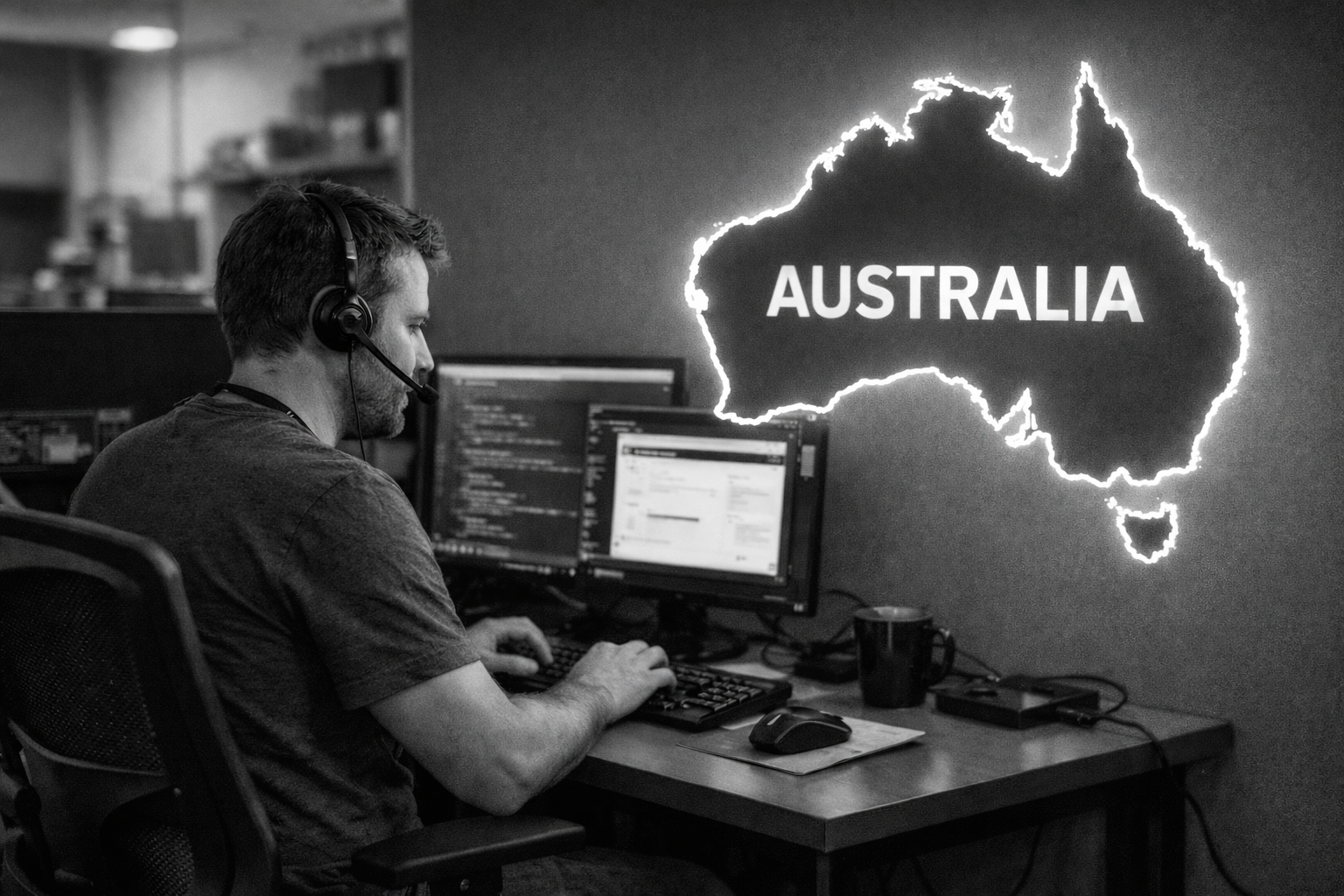
While North American MSPs grapple with the complexities of overnight shifts and Latin American providers command premium rates, Australian technology businesses have a geographic advantage that's often overlooked: the Philippines operates in a time zone that's nearly identical to Australia's, creating opportunities for real-time collaboration, daytime shifts, and seamless integration that other markets simply cannot match.
This isn't theoretical. Tens of thousands of Australian businesses already outsource to the Philippines, and the country has overtaken India as the world's leading destination for business process outsourcing. For Australian MSPs specifically, the time zone alignment transforms what could be a logistical challenge into a strategic competitive advantage.
Here's why the Philippines represents the optimal outsourcing destination for Australian MSPs—and how time zone alignment creates benefits that extend far beyond simple cost savings.
The Geography That Changes Everything
The Philippines operates on Philippine Standard Time (PST), which is UTC+8. For Australian businesses, this creates time relationships that are remarkably simple:
Western Australia (Perth): The same time zone. Zero adjustment required. A Perth-based MSP can have Filipino technicians working standard 8 AM to 5 PM hours that perfectly align with their own business day.
Central Australia (Adelaide, Darwin): Just 1.5 hours ahead. A small adjustment that still allows for substantial overlap during core business hours.
Eastern Australia (Sydney, Melbourne, Brisbane): Two hours ahead—or three during daylight saving time from October to April. Even with this difference, there's a 6-7 hour window where both teams are online simultaneously.
Compare this to the situation North American MSPs face. The Philippines is 12-15 hours ahead of US time zones, meaning Filipino teams must work overnight shifts to align with American business hours. This creates fatigue, reduces quality of life, and increases turnover—challenges that Australian MSPs simply don't encounter.
The Real-Time Collaboration Advantage
Time zone alignment isn't just about convenience—it fundamentally changes how teams can operate together.
Daily Standups and Team Meetings
When your offshore team works during your business day, you can include them in daily standups, sprint planning, client briefings, and emergency response calls. They're not working in isolation, submitting updates via email that you read hours later. They're present, engaged, and able to respond in real time.
For MSPs running agile operations or providing managed services that require rapid response to client needs, this synchronous communication is transformative. Issues get escalated immediately. Questions get answered during the same conversation. Knowledge transfers happen naturally through participation rather than through formal documentation.
Client-Facing Support
Australian MSPs can confidently use Philippines-based staff for client-facing support roles because communication happens during normal business hours. When a Sydney client calls at 2 PM, the Filipino technician handling their ticket is alert, energized, and working their normal daytime schedule—not struggling through a 3 AM shift.
This matters for service quality. Research consistently shows that workers performing complex cognitive tasks during overnight hours make more errors, provide lower-quality customer service, and experience faster burnout. By operating in aligned time zones, Australian MSPs access high-performing teams without compromising on quality.
After-Hours Coverage Without the Night Shift
Here's where the time zone relationship gets particularly interesting for Australian MSPs. While there's substantial daytime overlap, there's also a natural offset that can provide after-hours coverage without requiring anyone to work graveyard shifts.
A Filipino team working 7 AM to 4 PM Manila time is covering 9 AM to 6 PM in Sydney (during standard time) or 10 AM to 7 PM (during daylight saving). Extend that to a 6 AM to 3 PM Manila shift, and you're providing coverage from 8 AM to 5 PM Sydney time—covering the full Australian business day while the Filipino team works normal, healthy daytime hours.
For MSPs offering extended support hours or 24/7 coverage, this creates a sweet spot where both teams operate during daylight hours in their respective locations. No one is sacrificing their health or family time to provide coverage.
Why This Matters More Than Cost Savings Alone
Yes, Australian MSPs can achieve approximately 70% cost savings by hiring Philippines-based technicians compared to domestic staff. This economic benefit is significant—a Level 1 helpdesk technician in Sydney might cost $55,000-$70,000 AUD annually in salary alone, while a similarly skilled Filipino technician costs $15,000-$22,000 USD.
But focusing only on cost savings misses the broader strategic advantage. The time zone alignment creates value in ways that pure cost arbitrage cannot:
Higher Retention and Lower Turnover
Filipino IT professionals actively prefer Australian accounts over US accounts specifically because of the time zone advantage. Working daytime hours allows them to maintain normal sleep schedules, spend evenings with family, avoid heavy traffic during commute times, and maintain better overall wellbeing.
Industry data shows that offshore teams serving Australian clients have 30-50% lower attrition rates compared to teams working US hours. For MSPs, this translates directly to lower recruitment costs, better institutional knowledge retention, and more stable client service.
Faster Onboarding and Knowledge Transfer
When your offshore team operates during your business hours, onboarding becomes dramatically simpler. New hires can shadow experienced staff in real time, participate in training sessions during normal working hours, and ask questions while subject matter experts are available to answer.
This accelerates time-to-productivity and ensures that offshore team members develop the same level of expertise as onshore staff. The result is a genuinely integrated team rather than a separate overnight shift operating in isolation.
Cultural and Linguistic Alignment
The Philippines has a 97% literacy rate and is the world's third-largest English-speaking nation. English is a medium of instruction throughout Philippine education, and Filipino professionals have decades of experience supporting Australian businesses specifically.
This creates cultural compatibility that goes beyond language proficiency. Filipino IT professionals understand Australian business norms, communication styles, and client service expectations. They adapt quickly to Australian compliance requirements, from privacy regulations to industry-specific standards.
What This Looks Like in Practice
Australian MSPs implementing Philippines-based support typically structure their teams in one of several models, each taking advantage of time zone alignment:
The Integrated Model
The offshore team operates as a seamless extension of the onshore team, handling tickets from a shared queue during overlapping hours. Morning tickets might be resolved by Sydney staff, afternoon tickets by Manila staff, with handoffs happening naturally during the overlap window.
This model works particularly well for MSPs with predictable ticket volumes and clear escalation procedures. The offshore and onshore teams function as a single unit rather than separate shifts.
The Follow-the-Sun Model
The offshore team picks up where the onshore team leaves off, providing extended coverage without gaps. An Australian MSP might have local staff covering 8 AM to 5 PM, with Filipino staff continuing from 5 PM to midnight (or later), all while working normal daytime hours in Manila.
This model enables Australian MSPs to offer extended support hours or 24/7 coverage without requiring anyone to work overnight shifts, dramatically improving quality and sustainability.
The Specialized Model
Some Australian MSPs use Philippines-based teams for specific functions that benefit from dedicated focus—monitoring and alerting, password resets and basic helpdesk, documentation and knowledge base maintenance, or ticket triage and initial response.
This allows the Australian team to focus on complex troubleshooting, strategic projects, client relationship management, and on-site support while the Filipino team handles high-volume routine work during their normal business hours.
The Compliance and Security Considerations
Australian MSPs must navigate specific regulatory requirements, and working with offshore teams requires careful attention to compliance. The good news: the Philippines has robust data protection laws and a mature BPO infrastructure that understands these requirements.
Data Privacy and Protection
The Philippines has comprehensive data privacy legislation that aligns with international standards. Major BPO providers operate with ISO 27001 certification, SOC 2 compliance, and other security frameworks that Australian clients expect.
For Australian MSPs, this means working with providers who already have the infrastructure and processes in place to handle sensitive data securely. The key is selecting partners with demonstrated compliance experience rather than trying to build compliance frameworks from scratch.
Legal and Contractual Clarity
Australian MSPs should ensure their offshore agreements clearly address jurisdiction, intellectual property ownership, confidentiality obligations, and termination procedures. Working with established Philippine staffing providers who already have Australian clients simplifies this—they understand Australian legal expectations and have standard agreements that address common concerns.
Making the Transition: What Australian MSPs Should Know
If you're an Australian MSP considering Philippines-based support, here are the practical realities you should understand:
Start with Clear Scope
Don't try to offshore everything at once. Begin with well-defined, repeatable tasks—Level 1 helpdesk support, monitoring and alerting, or specific client accounts. This allows you to refine processes, build confidence, and demonstrate value before expanding scope.
Invest in Onboarding
The time zone advantage means you can provide high-quality onboarding during your normal business hours. Take advantage of this. Live training sessions, shadowing opportunities, and real-time Q&A during the first 2-3 weeks will dramatically accelerate performance.
Establish Communication Rhythms
Daily standups, weekly reviews, and regular one-on-ones create structure and alignment. Because you're operating in similar time zones, these meetings happen at reasonable hours for everyone—unlike US MSPs scheduling midnight calls to check in with their offshore teams.
Build One Team, Not Two
The biggest mistake Australian MSPs make is treating offshore staff as a separate entity rather than an integrated team. Include Filipino team members in company communications, recognize their achievements, and create opportunities for connection with onshore staff. When both teams see themselves as one unit, quality improves dramatically.
The Competitive Landscape: Why Now?
The Australian MSP market is consolidating. Nearly half of Australian MSPs report less than $5 million in annual revenue, and the market is ripe for consolidation by larger players and foreign private equity-backed aggregators.
In this environment, operational efficiency becomes a competitive weapon. MSPs that can deliver high-quality service at lower cost while maintaining or improving response times gain market share. Those that cannot compete on these dimensions face pressure from both larger MSPs with economies of scale and smaller agile competitors with lower overhead.
The time zone advantage with the Philippines creates an opportunity for Australian MSPs to achieve both cost efficiency and service quality improvements simultaneously—something that's difficult to accomplish through domestic staffing alone.
Common Concerns Addressed
"Will my clients know they're talking to offshore staff?"
Filipino IT professionals working Australian hours provide support that's indistinguishable from domestic staff. With proper training on your processes and client environments, clients typically cannot tell the difference—and in blind satisfaction surveys, offshore teams often score as high as or higher than domestic teams.
"What about internet reliability and power issues?"
Modern Philippine BPO facilities operate with redundant internet connections and backup power systems. Tier 1 data centers with 99.9% uptime are standard. While utilities in the Philippines can be less reliable than in Australia, professional offshore providers have infrastructure that eliminates these concerns.
"How do I manage staff I can't see?"
The same way you manage remote domestic staff—with clear expectations, regular communication, and performance metrics. The time zone alignment actually makes management easier than managing US-based offshore teams because you can have management conversations during normal business hours rather than scheduling midnight calls.
The Bottom Line: Geography as Strategy
For Australian MSPs, the Philippines represents more than just a cost-saving opportunity. It's a geographic advantage that enables better service delivery, higher team satisfaction, and more sustainable growth.
While US MSPs struggle with the complications of 12-15 hour time differences and Latin American providers command premium rates for their time zone proximity, Australian MSPs can access world-class IT talent in a time zone that enables true collaboration—at a fraction of domestic costs.
This isn't about choosing between quality and cost. It's about recognizing that for Australian businesses specifically, the Philippines offers both. The time zone alignment creates operational advantages that go far beyond simple arbitrage, enabling Australian MSPs to build truly integrated global teams that perform as well as domestic staff while operating at sustainable cost structures.
The question isn't whether to consider Philippines-based support. It's whether you can afford not to—especially as competitors who embrace this model gain operational advantages that become increasingly difficult to match through domestic staffing alone.
Ready to Explore Philippines-Based Support for Your Australian MSP?
Konnect specializes in connecting Australian MSPs with dedicated IT professionals from the Philippines. We understand the unique requirements of Australian businesses and provide seamless integration with your existing operations.
What we provide:
Pre-vetted technical talent with MSP experience: Our team members are already trained on ConnectWise, Autotask, Datto, and other common MSP platforms. They understand helpdesk operations, ticketing systems, and client service expectations.
Time zone optimization for Australian businesses: We schedule teams specifically to maximize overlap with Australian business hours while ensuring staff work healthy daytime schedules in Manila.
Complete HR, payroll, and compliance management: We handle all employment logistics, Philippine labor law compliance, and administrative overhead so you can focus on service delivery.
Flexible engagement models: Whether you need one technician or an entire team, we scale with your business needs without long-term commitments or expensive buyouts.
Schedule a consultation to discuss how Philippines-based support can help your MSP scale efficiently while maintaining service quality.
📅 Schedule a meeting: https://meet.brevo.com/konnectph
✉️ Email us: hello@konnect.ph
Let's discuss how time zone advantages can become your competitive edge.
About the Author
Vilbert Fermin is the founder of Konnect, a remote staffing company connecting North American and Australian businesses with top Filipino talent. With deep expertise in IT support and remote team management, Vilbert helps MSPs access skilled technical professionals without the overhead of full-time domestic IT staff. His mission is to showcase Filipino excellence while helping businesses stay protected, productive, and competitive through strategic remote staffing.