Authored by Vilbert Fermin · Konnect · Dec 2 2025
Introduction
When Netflix needs customer support agents, when American hospitals need medical coders, when Australian retailers need e-commerce specialists, they turn to the same place: the Philippines.
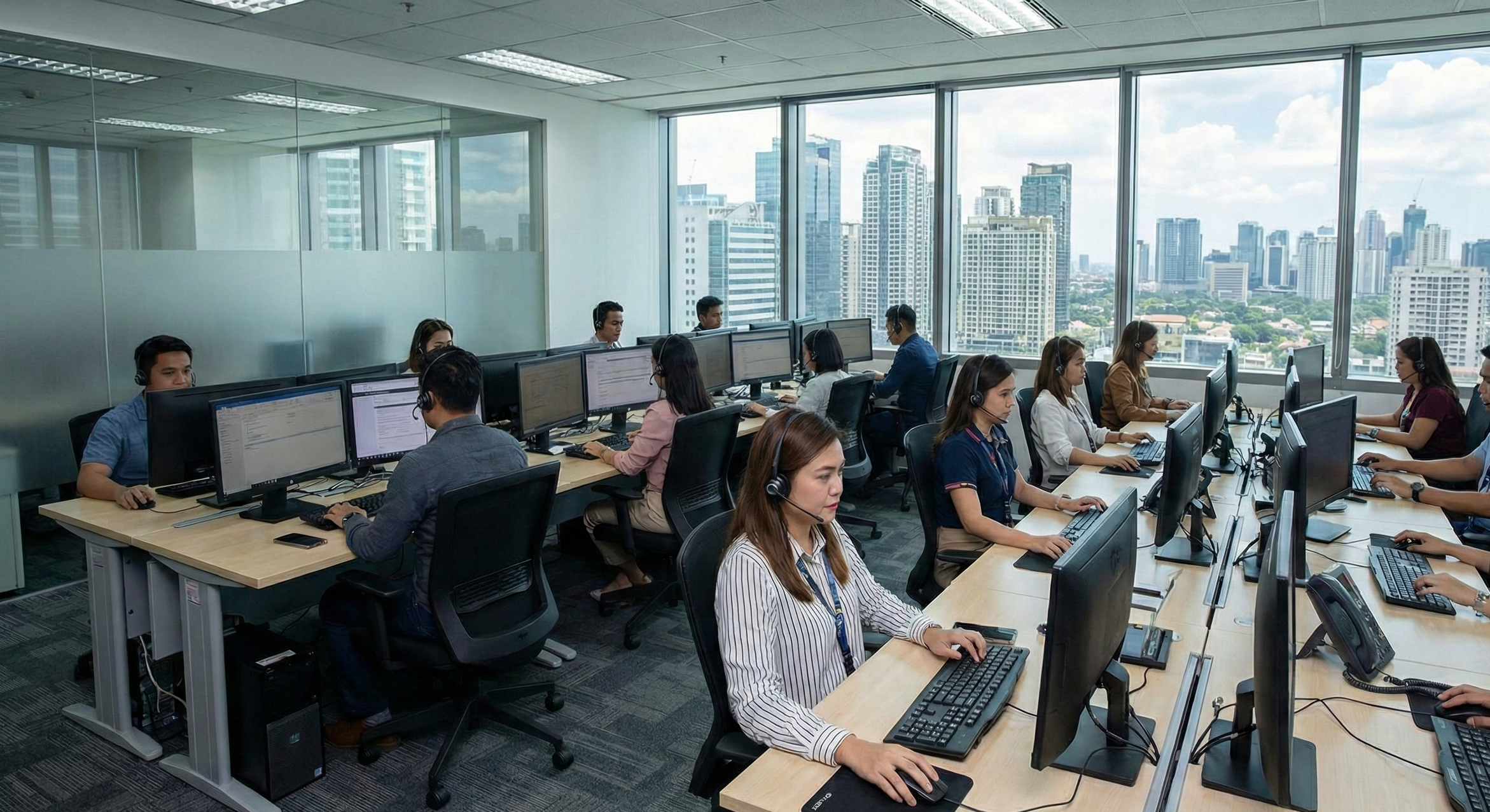
This isn't coincidence. The Philippines has systematically built itself into the world's undisputed leader in remote staffing and business process outsourcing. The numbers tell a compelling story:
$38 billion BPO industry (2024 revenue, growing 7% annually)
1.82 million professionals employed in outsourcing roles
Ranked #2 in Asia for English proficiency (28th globally out of 123 countries)
97% literacy rate ensuring educated workforce
60+ Fortune 500 companies with operations in the Philippines
But statistics don't explain why companies that try Philippines-based remote staff rarely go back. Why an MSP in Dallas prefers Manila-based IT support over local hiring. Why a SaaS company in Sydney builds its entire customer success team in Cebu.
This comprehensive guide breaks down exactly why the Philippines dominates remote staffing—covering English proficiency, cultural compatibility, cost advantages, government support, infrastructure, and the unique factors that make Filipino professionals the gold standard for remote work.
Whether you're considering your first remote hire or expanding an existing offshore team, understanding these advantages will help you make informed decisions about where to build your remote workforce.
The Philippine Advantage: 7 Compelling Reasons
1. Exceptional English Proficiency
English communication is the foundation of successful remote work. The Philippines delivers this better than any other outsourcing destination.
The Numbers:
2nd in Asia for English proficiency (only behind Singapore)
28th globally out of 123 countries (2025 EF English Proficiency Index)
569 points (categorized as "High Proficiency")
55% of adults speak English; 80% understand it
Ages 26-40 reach C1 level (advanced proficiency)
Why Philippines Excels at English:
Historical Foundation: The Philippines was a U.S. territory from 1898-1946. English became deeply embedded in education, government, and business—a legacy that continues today.
Education System: English is the primary language of instruction from elementary through university. Filipinos learn math, science, and social studies in English, creating natural fluency beyond rote memorization.
Cultural Immersion: Unlike countries where English is purely academic, Filipinos consume American media (TV shows, movies, music) from childhood. This creates cultural context for idiomatic expressions, humor, and conversational nuances that formal education can't teach.
Business Language: In Philippine workplaces, English is the default professional language—used in emails, meetings, documentation, and presentations. This daily usage maintains and sharpens skills.
Neutral Accent: Filipino English features a neutral, American-influenced accent that North American and Australian customers find easy to understand. This contrasts sharply with heavier accents from other outsourcing locations.
English Proficiency Comparison:
| Country | EF English Rank (Asia) | Global Rank | Proficiency Level |
|---|---|---|---|
| Philippines | #2 | 28th | High Proficiency |
| India | #8 | 60th | Moderate Proficiency |
| Vietnam | #12 | 66th | Moderate Proficiency |
| China | #14 | 82nd | Low Proficiency |
Real-World Impact: When customer service representatives can understand nuance, use appropriate tone, and adapt communication style to different personalities, customer satisfaction scores rise dramatically. Philippine-based support teams consistently achieve 85-95% CSAT scores—matching or exceeding in-house North American teams.
2. Highly Educated and Skilled Workforce
The Philippines produces 500,000+ university graduates annually, creating a massive pool of educated professionals entering the workforce.
Education Statistics:
2,400+ higher education institutions
500,000+ graduates annually
Strong STEM programs producing IT professionals, engineers, accountants
K-12 curriculum aligned with international standards (reformed in 2013)
Popular Degree Programs for Remote Work:
Information Technology and Computer Science
Business Administration and Accounting
Nursing and Healthcare Administration
Engineering (various specializations)
Communications and Marketing
Professional Certifications: Filipino professionals actively pursue international certifications including CompTIA (A+, Network+, Security+), Microsoft certifications, AWS and Google Cloud credentials, PMP for project managers, and CPA for accountants. This commitment to continuous learning ensures skills remain current and competitive.
3. Strong Cultural Compatibility with Western Business
Cultural alignment determines how smoothly remote teams integrate with existing operations. Filipino professionals excel here due to historical and ongoing Western influence.
Key Cultural Traits:
Service Orientation: Filipino culture emphasizes hospitality ("malasakit") and genuine care for others. This translates to exceptional customer service and proactive support.
Respect for Authority: Hierarchical awareness means Filipino professionals follow processes, meet deadlines, and communicate professionally with managers.
Adaptability: Exposure to diverse cultural influences creates flexibility in working with different communication styles and business practices.
Western Pop Culture Familiarity: Filipinos understand American references, humor, and conversational norms—eliminating awkward cultural gaps in customer interactions.
Communication Style: Filipinos communicate clearly and professionally in business contexts. They're comfortable with direct feedback, ask clarifying questions, and proactively share status updates—essential traits for remote work success.
4. Significant Cost Advantages
The Philippines offers 50-70% cost savings compared to U.S. hiring, without the quality trade-offs often associated with offshore work.
Salary Comparison (Monthly USD):
| Role | U.S. Salary | Philippines | Savings |
|---|---|---|---|
| Customer Service Rep | $3,500-$4,500 | $800-$1,200 | 70-75% |
| IT Helpdesk (Tier 1) | $4,000-$5,500 | $1,000-$1,500 | 70-75% |
| Virtual Assistant | $3,000-$4,000 | $600-$1,000 | 70-80% |
| Bookkeeper | $4,000-$5,000 | $1,000-$1,500 | 65-75% |
| Software Developer | $8,000-$12,000 | $2,000-$3,500 | 60-70% |
| Digital Marketing Specialist | $5,000-$7,000 | $1,200-$2,000 | 65-75% |
Note: Philippine salaries include 13th month pay (mandatory bonus) and typical benefits. Actual savings depend on specific roles and experience levels.
Beyond Salary Savings: The cost advantage extends beyond base compensation. You save on office space, equipment, benefits administration, recruitment costs, and training expenses. When working with a staffing partner like Konnect.ph, many of these costs are bundled into a simple monthly fee.
5. Strategic Time Zone Positioning
The Philippines operates on Philippine Standard Time (PST/GMT+8), creating strategic advantages for North American and Australian businesses.
For U.S. Companies:
Philippine daytime (8 AM - 5 PM) = U.S. evening/night
Philippine evening (6 PM - 3 AM) = U.S. business hours
Enables 24/7 support coverage with single offshore team
Night shift differential attracts motivated workers
For Australian Companies:
Only 2-5 hours difference (depending on Australian state)
Significant overlap during normal business hours
Real-time collaboration possible throughout workday
Easier coordination than U.S.-based outsourcing
The 24/7 Advantage: Many businesses use Philippine teams to provide after-hours support, essentially doubling their coverage without doubling costs. When your U.S. customers call at 10 PM, a fresh, alert Philippine-based agent answers—not an exhausted on-call employee.
6. Robust Government Support and Infrastructure
The Philippine government recognizes BPO as critical to economic growth and actively supports the industry.
Government Initiatives:
Republic Act 11927 (2023): Enhances digital skills training and English proficiency programs to ensure workforce competitiveness.
Tax Incentives: BPO companies receive tax holidays, reduced corporate tax rates, and exemptions on imported equipment.
Infrastructure Investment: Government prioritizes high-speed internet expansion (fiber optic networks in major cities), reliable power supply with backup systems, modern business districts and IT parks, and transportation infrastructure to BPO hubs.
IT Parks and Special Economic Zones: Designated areas with tax benefits for companies, 24/7 security, backup power generators, high-speed internet connectivity, and modern office facilities.
Major BPO Hubs:
Metro Manila: Largest hub, most diverse talent pool
Cebu: Second-largest, strong IT and customer service focus
Davao: Growing hub in southern Philippines
Clark (Pampanga): Near former U.S. air base, American cultural influence
Iloilo, Bacolod, Baguio: Emerging cities with lower costs
Telecommunications Infrastructure: The Philippines has invested heavily in internet connectivity with fiber optic cables connecting major cities, 4G/5G networks providing widespread mobile internet, multiple ISP options (PLDT, Globe, Converge) providing redundancy, and average speeds of 50-100 Mbps in urban areas (sufficient for remote work).
Backup Systems: Professional BPO operations maintain dual internet connections from different providers, Uninterruptible Power Supply (UPS) systems, generator backup for extended outages, and work-from-home capabilities as disaster recovery.
7. Exceptional Work Ethic and Loyalty
Filipino professionals bring intangible qualities that matter as much as technical skills.
Core Filipino Work Values:
"Pakikisama" (Getting Along): Strong team orientation, harmony-focused, collaborative rather than competitive. Filipino staff work well in teams, support colleagues, and prioritize group success.
"Utang na Loob" (Debt of Gratitude): When employers treat staff well, Filipinos feel genuine loyalty and obligation to reciprocate. This translates to going above and beyond job descriptions, long tenure (3-5 years common, 10+ years not unusual), genuine care about company success, and willingness to work extra hours during crises.
"Malasakit" (Genuine Care): Deep-rooted concern for others' wellbeing translates to exceptional customer service. Filipino support staff don't just resolve tickets—they ensure customers feel heard and valued.
Family-Oriented Motivation: Most Filipino professionals work to support extended families. This creates strong motivation for job performance, stability, and career growth. They're not job-hopping for marginal salary increases—they value long-term employment.
Country Comparisons: Philippines vs. Alternatives
Philippines vs. India
| Factor | Philippines | India |
|---|---|---|
| Cost | $800-$2,500/mo | Similar or slightly lower |
| English Proficiency | High, neutral accent | Variable, regional accents |
| Customer Service | World-class, hospitality culture | Strong but more transactional |
| Technical Depth | Excellent generalists | Deep specialists (IT/engineering) |
| Time Zone (U.S.) | 12-13 hours ahead | 9.5-12.5 hours ahead |
| Best For | Support, admin, creative, IT | Software development, data analytics |
Bottom Line: Philippines wins for English proficiency, customer service roles, and cultural fit with Western companies. India wins for technical depth and scale.
Philippines vs. Mexico (Latin America)
| Factor | Philippines | Mexico |
|---|---|---|
| Cost | $800-$2,500/mo | $1,500-$4,000/mo |
| English Proficiency | High, native-like | Moderate to good |
| Time Zone (U.S.) | 12-13 hours ahead | Same or 1-3 hours difference |
| Customer Service | Exceptional, hospitality culture | Good, more direct style |
| Talent Pool Size | Large (1.82M in BPO) | Growing but smaller |
| Best For | 24/7 support, high volume | Nearshore, real-time collaboration |
Bottom Line: Mexico wins for time zone proximity and Spanish-language needs. Philippines wins for English proficiency, cost, and talent pool depth.
Philippines vs. Eastern Europe
| Factor | Philippines | Eastern Europe |
|---|---|---|
| Cost | $800-$2,500/mo | $2,000-$5,000/mo |
| English Proficiency | High, native-like | Good, non-native |
| Technical Skills | Strong across domains | Exceptional (dev/engineering) |
| Customer Service | World-class, hospitality | Professional but less service-oriented |
| Time Zone (U.S.) | 12-13 hours ahead | 5-8 hours ahead |
| Best For | Support, admin, creative, IT | Software engineering, data science |
Bottom Line: Eastern Europe wins for highly technical development work. Philippines wins for cost, customer service, and versatility.
Success Stories: Philippines-Based Remote Teams
Case Study 1: Australian MSP Triples Capacity
Background: 40-person Managed Service Provider in Sydney struggling to find qualified IT support staff locally. High salaries ($65,000-$80,000 AUD) and limited talent pool constrained growth.
Solution: Built 12-person helpdesk team in Manila (Tier 1 and Tier 2 support).
Results After 18 Months:
Ticket capacity increased 200%
First response time dropped from 4 hours to 45 minutes
Customer satisfaction improved from 78% to 92%
Annual savings: $480,000 AUD
Enabled 24/7 support without burnout
Case Study 2: U.S. E-commerce Company Scales Customer Support
Background: Fast-growing DTC brand in California experiencing 300% YoY growth. Domestic customer service team couldn't keep up with volume.
Solution: Hired 25 customer service representatives in Cebu through a staffing partner.
Results After 12 Months:
Response time reduced from 24 hours to 2 hours
CSAT scores maintained at 94% (matching U.S. team)
Cost per ticket dropped 65%
Holiday season coverage without overtime costs
Case Study 3: Canadian SaaS Startup Builds Development Team
Background: Early-stage SaaS company in Toronto needed to extend runway while building product. Local developers commanded $90,000-$120,000 CAD salaries.
Solution: Hired 4 full-stack developers and 2 QA engineers in Manila.
Results After 24 Months:
Shipped product 6 months ahead of schedule
Extended runway by 18 months
Zero turnover in Philippine team
Successfully raised Series A with working product
Addressing Common Concerns
"What About Data Security?"
Philippine BPO industry operates under strict data protection laws (Data Privacy Act of 2012) with penalties for violations. Major outsourcing companies maintain ISO 27001 certification, SOC 2 compliance, and HIPAA compliance for healthcare clients. Infrastructure includes enterprise-grade security, encrypted communications, and access controls.
When working with reputable staffing partners, data security practices match or exceed what most small to mid-sized businesses implement domestically. The key is choosing partners with documented security protocols and compliance certifications.
"Won't There Be Quality Issues?"
Quality depends entirely on hiring standards and management practices. Philippine talent pools include world-class professionals—the key is proper recruitment, training, and ongoing management. Companies using structured hiring processes and quality partners consistently achieve equal or better quality than domestic teams.
The misconception that "offshore = lower quality" comes from companies that cut corners on recruitment or management. When you invest in proper hiring and treat remote staff as valued team members, quality issues disappear.
"How Do We Handle the Time Difference?"
Filipino remote workers are accustomed to working night shifts aligned with U.S. business hours. The BPO industry has operated this way for 20+ years with established best practices. Many Filipinos prefer night work due to shift differentials and lighter traffic.
Modern tools (Slack, Zoom, Loom) enable asynchronous collaboration for tasks not requiring real-time communication. The key is setting clear expectations about availability and response times, then using the time difference strategically for 24/7 coverage.
"What About Turnover?"
Philippine BPO industry average turnover is 25-30% annually—comparable to U.S. customer service roles. However, companies offering competitive salaries, benefits, career growth, and respectful management consistently achieve below-average turnover.
The "utang na loob" (debt of gratitude) cultural trait means loyal employees who feel valued stay for years. Invest in your Philippine team's development, treat them as equals, and you'll see retention rates that exceed domestic benchmarks.
Getting Started: Your Roadmap to Philippine Remote Staffing
Step 1: Define Your Requirements
Identify roles to fill (start with 1-3 positions)
Document detailed job descriptions
Determine work schedule requirements
Set budget expectations (research market rates)
Step 2: Choose Your Approach
Option A - Staffing Partner: Work with companies like Konnect.ph who handle recruitment, HR, payroll, and compliance. Best for companies new to offshore hiring.
Option B - Employer of Record (EOR): Use services like Deel or Remote to legally employ workers while handling compliance. Good for companies wanting more direct control.
Option C - Direct Hiring: Establish your own Philippine entity. Only recommended for companies planning large teams (50+).
Step 3: Recruit and Onboard
Source candidates through partner or job boards
Conduct structured interviews (skills + culture fit)
Complete background and reference checks
Onboard with clear documentation and training
Set up communication tools and workflows
Step 4: Manage for Success
Schedule regular 1:1s and team meetings
Set clear KPIs and provide regular feedback
Create career growth opportunities
Build team culture across time zones
Recognize achievements and celebrate wins
The Future: Philippines Remote Staffing in 2025 and Beyond
The Philippine remote staffing industry continues evolving with several key trends:
AI Integration: Philippines-based teams increasingly use ChatGPT for customer responses, AI translation for multilingual support, and automated workflows for repetitive tasks. This creates higher-value roles requiring human judgment + AI efficiency.
Specialization: The market is moving beyond generic "virtual assistants" toward niche expertise (Salesforce admins, AWS architects), industry specialists (legal tech, healthcare, fintech), creative professionals (video editors, 3D designers), and data scientists.
Remote-First Infrastructure: Philippines continues investing in 5G network expansion, coworking spaces in emerging cities, digital skills training programs, and government support for tech education.
Competitive Positioning: As costs rise in traditional outsourcing hubs, Philippines maintains advantages through continuously improving English proficiency, cultural alignment with Western markets, service-oriented mindset, and young, tech-savvy workforce.
Conclusion: The Philippines Advantage Is Real and Sustainable
The Philippines didn't become the world's remote staffing leader by accident. It's the result of historical English immersion creating native-level fluency, an education system producing skilled graduates, cultural values aligning with Western business practices, government support building infrastructure, geographic positioning creating time zone advantages, service-oriented culture delivering exceptional customer experiences, and cost structure enabling 50-70% savings without quality trade-offs.
For North American and Australian companies, Philippine remote staffing represents one of the most powerful competitive advantages available. It enables:
Scaling without proportionally scaling costs
24/7 operations without burning out staff
Access to talent in tight labor markets
Focus on strategic work by offloading transactional tasks
Flexibility to grow or contract based on demand
The question isn't whether to consider Philippine remote staff. It's how quickly you can leverage this advantage before competitors do.
Smart businesses are already building Philippine teams. MSPs are scaling support capacity. E-commerce companies are providing 24/7 customer service. SaaS startups are building entire operations with distributed teams. The Philippines offers everything needed for remote staffing success: skills, language, culture, cost, and loyalty.
The future of work is global and distributed. The Philippines is leading that future.
Ready to Build Your Philippine Remote Team?
Konnect.ph specializes in connecting North American and Australian businesses with exceptional Filipino remote talent.
What we offer:
Pre-vetted candidates with proven skills
Full HR, payroll, and compliance handling
Dedicated account management
Performance monitoring and support
Risk-free trial periods
Schedule a free consultation to discuss your staffing needs and learn how we can help you build a high-performing Philippine team.
About the Author
Vilbert Fermin is the founder of Konnect, a remote staffing company connecting North American businesses with top Filipino talent. As a Filipino entrepreneur with deep roots in both Philippine and North American business cultures, Vilbert has helped hundreds of companies successfully build and manage remote teams in the Philippines. His mission is to showcase Filipino excellence while helping businesses scale efficiently through strategic remote staffing.