You are sitting across the boardroom table from the operations director of a fifty-person regional healthcare clinic, and you can feel the contract slipping away. They love your security stack, they agree with your strategic roadmap, and they are perfectly comfortable with your per-user pricing model. Then comes the dealbreaker question: they need guaranteed, live-answer technical support at three in the morning for their overnight intake staff. Your current model involves an on-call rotation where your exhausted senior engineers sleep with their phones on high volume, praying the network monitoring alerts are false positives. You hesitate, knowing that promising true around-the-clock coverage will either ruin your team's morale or force you to hire a dedicated domestic night shift that will completely consume the profit margin of the entire contract. This exact scenario is the primary growth ceiling for managed service providers across North America and Australia today.
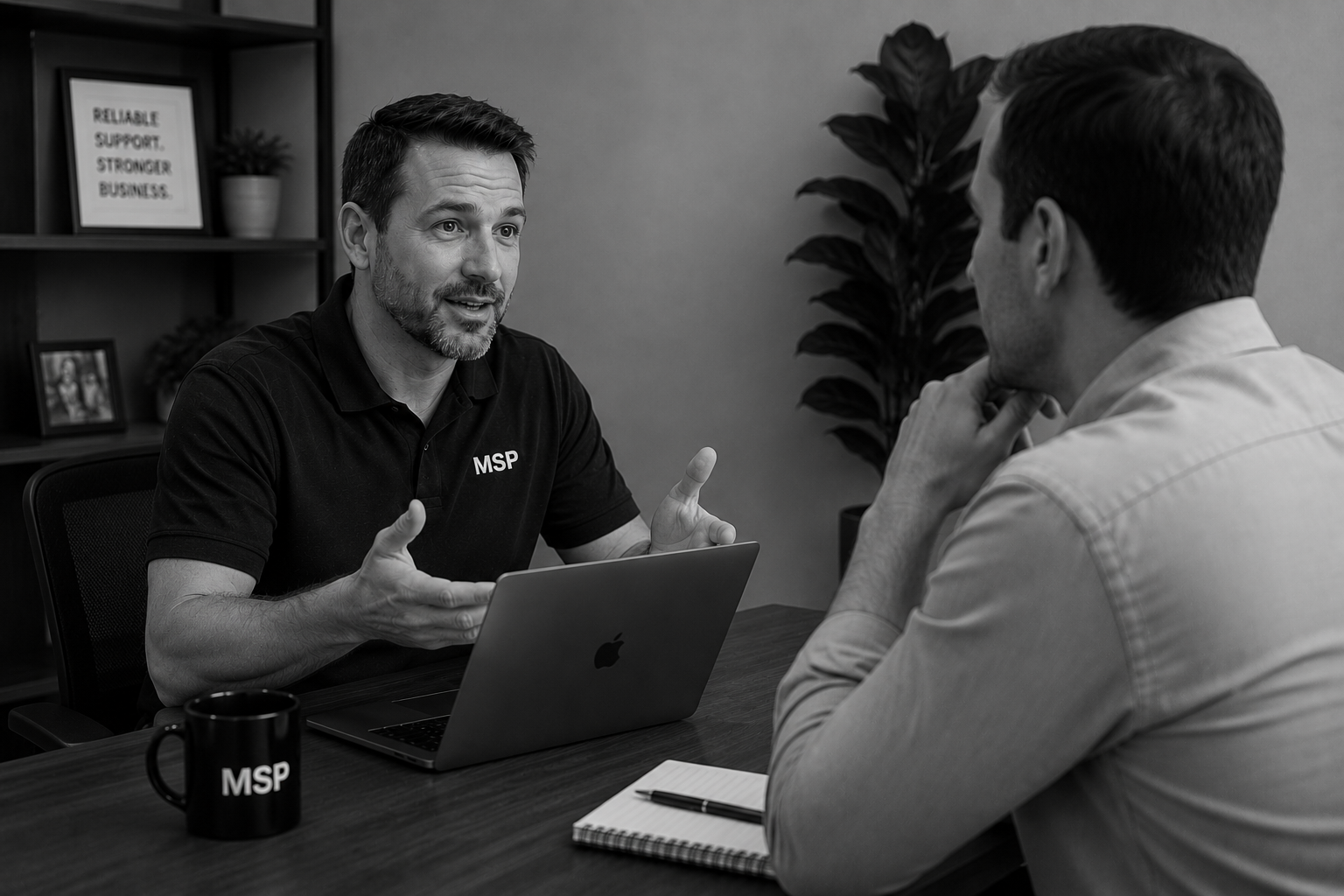
The expectation for continuous, uninterrupted technical support is no longer restricted to enterprise-level corporations. Small and mid-sized businesses, driven by remote workforces, global supply chains, and rigid compliance requirements, now operate outside the traditional nine-to-five window. However, delivering on this expectation using a traditional, localized staffing model has become financially toxic for the average MSP. When you map out the logistics of providing continuous coverage, you quickly realize that a single twenty-four-hour desk requires a minimum of three to four full-time employees to account for standard shifts, weekends, holidays, and inevitable sick leave. According to the CompTIA State of the Tech Workforce report, escalating base compensation for entry-level domestic IT roles has outpaced standard managed service contract price increases for three consecutive years.
The Mathematical Reality of the Domestic Night Shift
Attempting to build a localized overnight technical team involves hidden costs that extend far beyond the elevated base salaries. To attract a competent technician willing to work the graveyard shift in the United States, Canada, or Australia, you must offer significant shift differentials—often twenty to thirty percent above daytime rates. Because these roles are historically stepping stones, the turnover rate for domestic overnight IT staff is catastrophically high. Every time a night shift technician resigns, you incur the cost of recruiting, interviewing, onboarding, and training their replacement, all while your daytime staff is forced to temporarily cover the overnight gap, leading to cascading burnout. You can clearly calculate what offshore IT staffing would actually save your MSP by comparing the fully burdened cost of a churning domestic night desk against a stable remote team.
When analyzing the hard numbers, the financial divide between maintaining an in-house overnight team versus partnering with an established offshore provider becomes stark. The financial burden of local staffing practically mandates that you either price yourself out of the market to maintain margins or absorb the losses as a cost of doing business, which stunts your ability to invest in advanced security tools or high-level engineering talent.
The Strategic Leverage of the Follow-the-Sun Model
The most profitable MSPs have stopped fighting the domestic labor market and have instead embraced global talent pools to establish follow-the-sun operational models. By strategically placing your Tier 1 and Tier 2 support staff in the Philippines, you instantly solve the night shift dilemma. For North American providers, the Philippine timezone is an exact inversion, meaning your remote technicians are working their natural daytime hours while supporting your clients' overnight emergencies. They are not fighting their circadian rhythms, their morale remains high, and their cognitive function is sharp when handling a critical server outage at four in the morning your time. For Australian providers, the near-perfect timezone overlap means you can instantly double the size of your daytime dispatch and triage team without leasing additional office space.
This strategic alignment is why major research from organizations like Gartner's Global IT Services portal continuously emphasizes the integration of distributed global teams for technology service providers. It is not merely a cost-cutting exercise; it is a fundamental restructuring of how service is delivered. When your clients submit a ticket at midnight, they are no longer greeted by a groggy engineer who was just woken up. They are immediately connected to an alert, highly trained professional whose primary function is to deliver an exceptional customer experience during those exact hours. Understanding how MSPs can offer 24/7 support without burning out their team is fundamentally about putting the right people in the right timezone.
Mitigating Risk and Ensuring Quality Across Borders
Transitioning to an offshore coverage model requires absolute honesty about the operational adjustments your MSP must make. You cannot simply hand a generic list of client passwords to a remote technician in Manila and expect them to intuitively understand your bespoke network configurations. The failure point for most offshore initiatives is not the capability of the talent, but the poverty of the domestic MSP's documentation. To make this model succeed, you must standardize your knowledge base. Every client environment must be rigorously documented in your professional services automation tool, with clear, step-by-step resolution paths for the most common overnight alerts, such as backup failures, password resets, and critical offline server notifications.
Furthermore, you must establish strict escalation boundaries. Your offshore overnight team should be empowered to resolve eighty percent of standard inbound requests independently. For the remaining twenty percent—the catastrophic network failures, the complex firewall breaches, or the specialized proprietary software crashes—they must act as a highly effective triage unit. They can gather the logs, verify the scope of the outage, communicate calmly with the client, and only then wake up your designated domestic tier-three engineer with a fully documented ticket. This ensures your most expensive local talent is only ever disturbed for genuine emergencies that require their specific expertise, dramatically reducing their fatigue and protecting their billable efficiency for the next business day.
By restructuring your coverage model, you transform the requirement for continuous support from a margin-crushing liability into a powerful competitive advantage. You can confidently walk into any pitch meeting, look that healthcare operations director in the eye, and guarantee immediate, professional response times at any hour of the night. You stop competing purely on price with local one-man operations and start competing on service capability with enterprise-level providers, all while maintaining the healthy profit margins required to scale your business into the future.
📅 Book a 20-minute call:https://meet.brevo.com/konnectph
✉️ Email us:hello@konnect.ph
Stop sacrificing your margins and your weekends to cover overnight support tickets. Reach out today to discover how integrating a dedicated Filipino Tier 1 team can give you true 24/7 coverage and protect your profitability.
About the Author
Vilbert Fermin is the founder of Konnect, a remote staffing company connecting North American and Australian businesses with top Filipino talent. With deep expertise in IT support and remote team management, Vilbert helps MSPs access skilled technical professionals without the overhead of full-time domestic IT staff. His mission is to showcase Filipino excellence while helping businesses stay protected, productive, and competitive through strategic remote staffing.