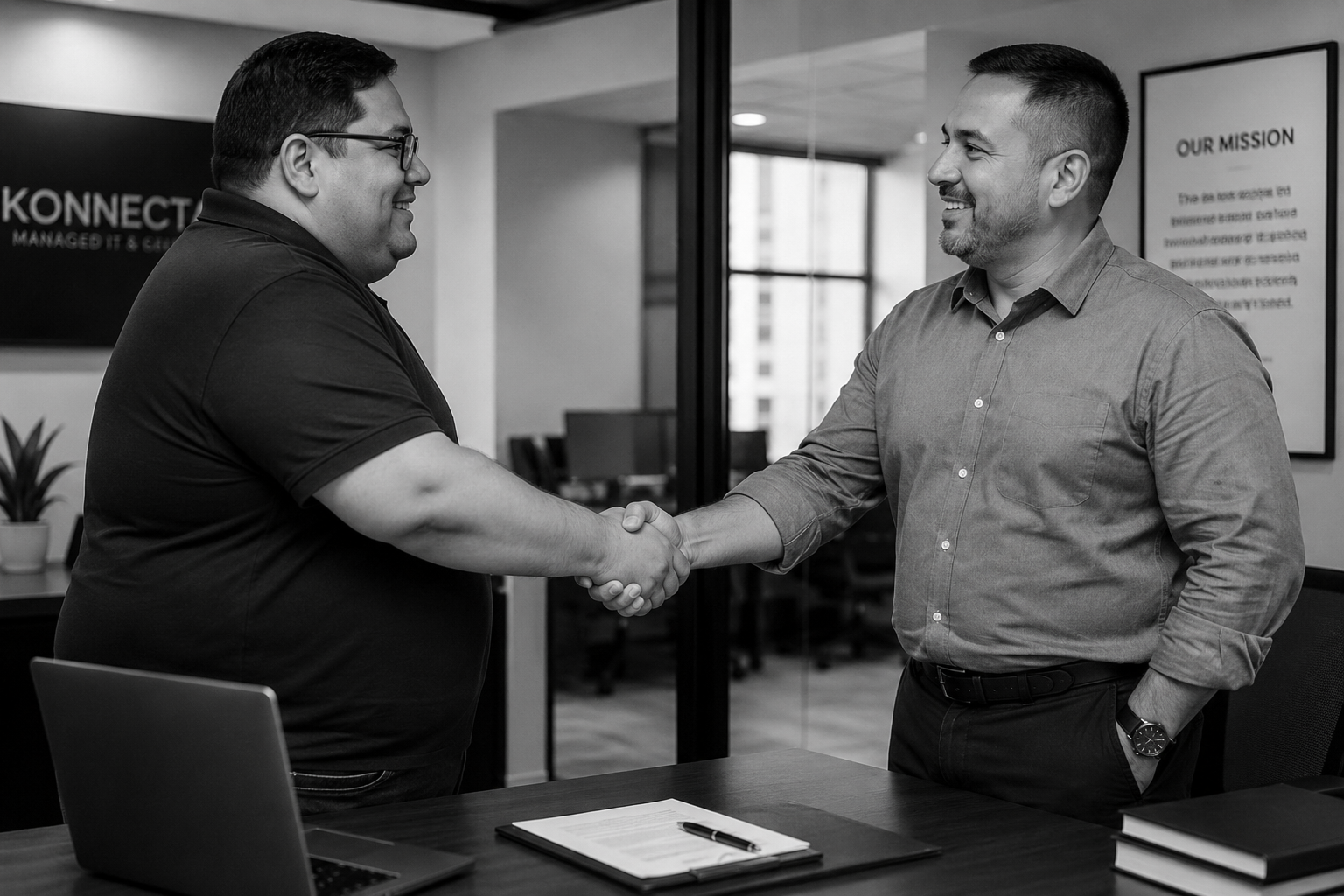
The managed services landscape has fundamentally shifted as we move deeper into 2026. The traditional all-you-can-eat model targeting small businesses with fifty to a hundred endpoints remains a stable baseline, but the aggressive growth is happening in the mid-market. Companies with three hundred to a thousand employees usually have an internal IT director or a small, overwhelmed technology department. These internal leaders are drowning in routine password resets, basic active directory provisioning, and endpoint troubleshooting, leaving them absolutely zero bandwidth to focus on strategic cybersecurity, cloud migrations, or digital transformation. They do not want to be replaced by a fully outsourced provider; they want a partner to carry the operational heavy lifting. According to recent market analysis published in the Channel Futures MSP 501 Analysis, co-managed services are now the primary driver of new recurring revenue for top-performing providers across North America and Australia.
The Margin Trap of Co-Managed Service Agreements
While the gross revenue from a co-managed contract looks incredible on a quarterly pipeline report, the operational reality can quickly turn into a financial nightmare if you deploy the wrong labor model. When you win a co-managed deal, the internal IT director at the client company will inevitably route the absolute highest volume, lowest complexity tickets directly to your team. If you are fulfilling these contracts using domestic Tier 1 and Tier 2 technicians based in the United States, Canada, or Australia, your profit margins will immediately compress. You are paying premium local salaries, burdened by inflation and the ongoing tech talent shortage, just to act as an overflow clearinghouse for another company's routine technical debt.
Furthermore, mid-market companies expect aggressive service level agreements and expanded coverage hours. As Channel Futures noted in their ongoing coverage of service provider economics, attempting to meet enterprise response times using a constrained, expensive local workforce leads to rapid employee burnout and turnover. Your senior engineers, who should be executing high-margin project work and consulting with the client's internal leadership, get pulled into the daily triage queue just to keep the contract in good standing. This dynamic forces many owners to carefully weigh the differences between co-managed IT vs fully managed services and question whether the mid-market is actually worth the operational headache.
Structuring the Offshore Co-Managed Support Pod
The most profitable MSPs have solved this margin trap by fundamentally redesigning how they staff their co-managed contracts. Instead of hiring more expensive local talent, they build dedicated offshore support pods in the Philippines specifically designed to integrate with the client’s internal IT department. In this model, you provide the client with a highly trained, dedicated team of Filipino technicians who handle one hundred percent of the routine, time-consuming Tier 1 alerts. Because the labor cost in the Philippines is sixty to seventy percent lower than domestic equivalents, you can afford to over-staff the account slightly, ensuring instantaneous response times that make the internal IT director look like a hero to their executive board.
The cultural alignment and world-class English proficiency of the Philippine workforce make this integration virtually seamless for the end user. When a mid-market employee calls the helpdesk, they are greeted by a patient, articulate professional who follows your exact standard operating procedures. This allows you to completely decouple your revenue growth from your localized headcount.
| Support Model Component | Traditional Local Co-Managed IT | Offshore-Leveraged Co-Managed IT |
|---|---|---|
| Primary L1/L2 Labor Cost | Extremely high; dilutes contract profitability | Predictable flat fee; maximizes gross margin |
| Scalability for Client Growth | Slow; restricted by local talent shortages | Rapid; tap into a massive global talent pool instantly |
| Local Engineer Utilization | Stuck clearing overflow password and printer tickets | Focused purely on vCIO consulting and project work |
| Client Perception of Value | Viewed as an expensive, slow vendor | Viewed as an ultra-responsive strategic partner |
Integrating Remote Talent with Corporate IT
To execute this strategy without alienating the client's existing IT staff, you must position the offshore team as a force multiplier rather than a replacement threat. Transparency is critical during the initial onboarding phase. You must facilitate direct, video-based introductions between the internal IT director and their new offshore pod. Establishing regular cadence meetings and shared Slack or Teams channels ensures that the remote Filipino technicians feel like an organic extension of the corporate culture. When building these frameworks, it is vital to review existing co-managed IT pricing models to ensure you are charging adequately for the management and oversight of the remote pod, even though your direct labor costs have drastically decreased.
Furthermore, implementing rigorous documentation standards is non-negotiable. An offshore team thrives on structured processes. You must work intimately with the client's internal team to map out exact escalation paths, defining precisely which alerts are handled by the Philippine desk and which critical infrastructure warnings trigger an escalation back to the client's internal engineers or your domestic Tier 3 staff. Research from the Gartner Global IT Services Report confirms that the most successful hybrid service deliveries rely on immutable, cloud-based runbooks rather than the tribal knowledge of a few senior technicians.
By building a robust, offshore foundation, you insulate your domestic team from the crushing impact of mid-market ticket volumes. You transform your MSP from a reactive vendor into a highly profitable, scalable partner capable of rescuing overwhelmed internal IT departments. The mid-market is waiting for providers who can deliver immediate operational relief without breaking the corporate budget, and the strategic deployment of Philippine IT professionals is the exact competitive advantage required to win those contracts in 2026.
📅 Book a 20-minute call: https://meet.brevo.com/konnectph
✉️ Email us: hello@konnect.ph
Are you ready to target larger mid-market clients without destroying your profit margins? Reach out today to discover how building a dedicated offshore co-managed pod can help you win enterprise deals and protect your local engineers from burnout.
About the Author
Vilbert Fermin is the founder of Konnect, a remote staffing company connecting North American and Australian businesses with top Filipino talent. With deep expertise in IT support and remote team management, Vilbert helps MSPs access skilled technical professionals without the overhead of full-time domestic IT staff. His mission is to showcase Filipino excellence while helping businesses stay protected, productive, and competitive through strategic remote staffing.