Philippine English Proficiency: Why It Matters for Client-Facing IT Support Roles
When MSPs evaluate offshore staffing, they typically focus on cost savings, technical skills, and time zone considerations. But there's a factor that determines success or failure more than any other: language proficiency.
It doesn't matter how technically skilled your offshore technician is if clients can't understand them. It doesn't matter how cost-effective the arrangement is if communication friction creates client dissatisfaction. And it doesn't matter how good your time zone overlap is if language barriers require constant clarification and repetition.
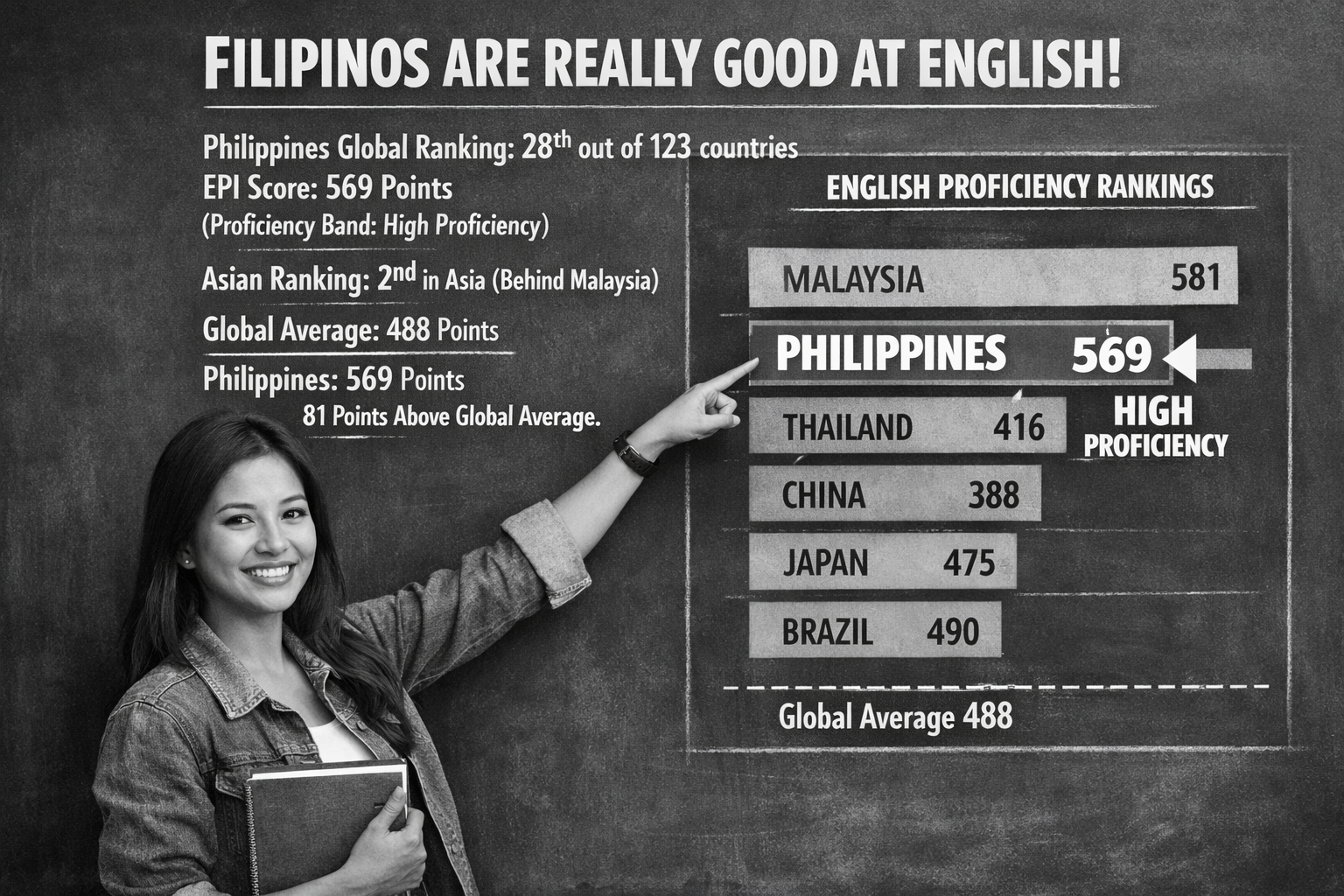
This is where the Philippines holds a unique and decisive advantage. The Philippines ranks 28th globally out of 123 countries in the 2025 EF English Proficiency Index with a score of 569—earning a "high proficiency" rating and placing second in all of Asia (behind only Malaysia). But for MSPs considering offshore support, the rankings tell only part of the story.
What matters more is how English functions in Philippine society: as a co-official language, as the medium of instruction throughout education, as the language of business and government, and as a daily reality for Filipino professionals from childhood—not a foreign language learned later in life.
The result? Filipino IT professionals don't just speak English. They think, troubleshoot, document, and communicate in English as naturally as in their native Tagalog or regional languages. This creates a level of linguistic fluency and cultural communication competence that simply cannot be replicated in markets where English is purely an academic subject or professional requirement.
As our comprehensive guide to working with Philippine remote staff explores, language proficiency is foundational to successful offshore implementation—and it's the single biggest differentiator between the Philippines and other low-cost outsourcing destinations.
The Philippines' English Proficiency: By the Numbers
Let's establish the quantitative foundation before exploring what makes Philippine English unique.
Global Rankings and Regional Context
According to the EF English Proficiency Index 2025:
Philippines Global Ranking: 28th out of 123 countries EPI Score: 569 points (on an 800-point scale) Proficiency Band: High Proficiency Asian Ranking: 2nd (behind Malaysia at 581) Global Average: 488 points (Philippines scores 81 points above average)
The Philippines dropped six positions from 22nd to 28th compared to the previous year, but this one-point score decrease (570 to 569) represents normal statistical variance rather than meaningful decline. More importantly, the Philippines still significantly outperforms the global average and maintains its position as one of Asia's top English-proficient nations.
What "High Proficiency" Actually Means
EF defines "high proficiency" as sufficient capability for:
Making presentations at work with confidence and clarity
Understanding TV shows, movies, and news broadcasts without subtitles
Reading newspapers, business documents, and technical materials
Engaging in nuanced professional conversations
For MSP operations, this translates to Filipino technicians who can handle client calls without language barriers, write clear ticket notes and documentation, understand technical materials and training resources, and communicate effectively in real-time chat and email support.
English vs. Other Low-Cost Markets
Comparing the Philippines to other common outsourcing destinations reveals its linguistic advantage:
Philippines: 569 (High Proficiency, 28th globally) Malaysia: 581 (High Proficiency, 24th globally) India: Not ranked separately in recent EPI (but estimated in moderate-to-high range) Pakistan: Not in top 50 (moderate proficiency estimated) Vietnam: 508 (Moderate Proficiency, 66th globally) China: 519 (Moderate Proficiency, 58th globally) Mexico: 508 (Moderate Proficiency, 65th globally) Colombia: 490 (Moderate Proficiency, 85th globally)
Among common outsourcing destinations for Western businesses, only Malaysia scores higher than the Philippines—and Malaysia's significantly smaller BPO sector (approximately 330,000 workers vs. Philippines' 1.82 million) limits options for MSP-specific staffing.
Why Philippine English Is Different: Historical and Cultural Context
Raw proficiency scores don't capture what makes Philippine English unique. Understanding the historical and cultural foundations explains why Filipino IT professionals communicate so effectively with Western clients.
English as Co-Official Language
The Philippines is one of the few countries globally where English holds co-official status alongside the national language (Filipino/Tagalog). This isn't symbolic—it's operational. English is used in government proceedings and official documents, legal contracts and court proceedings, business communications and corporate operations, and signage, media, and public information.
Filipino professionals grow up navigating a bilingual society where English isn't foreign—it's simply the appropriate language for certain contexts. An office manager might speak Tagalog with colleagues but naturally switch to English when discussing technical issues, writing reports, or communicating with international partners.
This code-switching fluency creates professionals who don't just translate from their native language to English—they think contextually in English when the situation requires it.
Medium of Instruction Throughout Education
Perhaps most critically, English is the medium of instruction in Philippine schools from elementary through university levels—particularly for math, science, and technical subjects.
Filipino students don't learn about IT concepts in Tagalog and then translate them to English. They learn networking, troubleshooting, and systems administration in English from the start. Technical vocabulary, problem-solving frameworks, and documentation practices are all developed in English.
This creates IT professionals whose technical knowledge is already encoded in English. When a Filipino technician explains a DNS issue or walks through Active Directory configuration, they're not translating concepts—they're communicating in the same linguistic framework they learned and think in.
Decades of Western Cultural Exposure
The Philippines has unique historical ties to the United States (American colonial period from 1898-1946, ongoing military and cultural relationships, and heavy influence on education and media). This creates cultural fluency that extends beyond language.
Filipino professionals understand American idioms, cultural references, and communication norms. They've grown up watching American TV shows, following Western news, and engaging with global English-language content. As research notes, Filipino workforce "English proficiency, work ethic, intelligence, and strong affinity to Western culture" are defining traits that continue to attract multinational clients.
This cultural-linguistic fluency means Filipino IT professionals intuitively grasp what Western clients mean—not just the words they say but the context, expectations, and implied meanings.
What Makes Philippine English Ideal for IT Support
Beyond general proficiency, specific characteristics of Philippine English make it particularly well-suited for client-facing IT support roles.
Accent Neutrality and Intelligibility
One of the most frequently cited advantages of Philippine English is its near-neutral accent with minimal regionalized pronunciation. While Filipino English has subtle characteristics (like occasional Spanish-influenced intonation), it lacks the heavy accents that can challenge comprehension in client interactions.
According to industry research, Filipino call center and BPO workers are specifically trained in "neutral" English pronunciation to serve international markets. This training builds on the foundation of naturally intelligible Philippine English to create communication that North American, Australian, and UK clients easily understand.
For MSPs, this means clients don't struggle to understand Filipino technicians—a critical factor in client satisfaction. Miscommunication due to heavy accents creates frustration, requires repetition, and damages the client experience. Philippine English avoids this pitfall.
Professional and Technical English Proficiency
Filipino IT professionals don't just speak conversational English—they command professional and technical English at levels required for business environments.
They write clear, grammatically correct ticket notes and documentation. They explain technical concepts without language-related confusion. They understand technical terminology and acronyms used in Western IT contexts. And they adapt communication style to match client preferences (more formal for law firms, more casual for startups).
This professional English competence is why 70%+ of the global BPO market's client-facing roles are based in the Philippines. Companies don't outsource customer-facing work to markets where language barriers create friction—they outsource to the Philippines precisely because language facilitates rather than hinders client relationships.
Written Communication Excellence
IT support isn't just phone calls—it's emails, ticket notes, chat messages, and documentation. Filipino IT professionals excel at written English communication, which is critical for asynchronous MSP support.
Research indicates that Filipinos rank highly in written English competence, with strong skills in grammar, vocabulary, coherence, and professional tone. This creates ticket documentation that's clear and useful, email communications that reflect well on your MSP, chat support that's professional and effective, and knowledge base articles that are well-written and accessible.
For MSPs concerned about offshore teams creating poorly written documentation that confuses rather than clarifies, Philippine English proficiency eliminates this worry.
Real-Time Verbal Communication
Helpdesk work requires real-time verbal communication under pressure—explaining complex issues to non-technical users, gathering information through questions, de-escalating frustrated clients, and collaborating with colleagues on urgent problems.
Filipino IT professionals handle these high-stakes verbal interactions effectively because they're comfortable with English in spontaneous, unscripted contexts. They don't need to pause to translate thoughts from their native language—English flows naturally even in stressful situations.
This verbal fluency explains why the Philippines dominates voice-based BPO services (customer service, tech support, sales) rather than just back-office work where minimal client interaction occurs.
The Communication-Technical Skill Balance
A common misconception is that technical skills matter more than communication skills for IT support. The reality is more nuanced.
| Support Activity | Technical Component | Communication Component |
|---|---|---|
| Initial Ticket Triage | 20% | 80% (understanding user's description) |
| Gathering Information | 30% | 70% (asking right questions clearly) |
| Explaining Solutions | 40% | 60% (translating technical to accessible) |
| Actual Troubleshooting | 70% | 30% (documenting steps) |
| Client De-escalation | 10% | 90% (empathy, tone, reassurance) |
The 70-30 Rule
Industry analysis suggests that helpdesk work is approximately 70% communication and 30% technical execution. A technician might spend 5 minutes actually fixing an issue but 15 minutes understanding the problem, explaining the solution, and ensuring the client feels heard and helped.
Filipino IT professionals excel because they combine sufficient technical competence with exceptional communication skills. This balance—not technical genius, but solid technical ability plus excellent communication—is precisely what MSP client-facing roles require.
Why Pure Technical Skill Isn't Enough
The most technically skilled technician provides poor service if they cannot explain solutions clearly, cannot gather accurate information from non-technical users, cannot de-escalate frustrated clients, or cannot document work in ways others can understand and build upon.
MSPs don't need offshore teams to architect complex cloud solutions—they need teams that can handle the high-volume, communication-intensive work of daily helpdesk operations. The Philippines provides exactly this combination.
Comparison: Philippines vs. Other Offshore Destinations
When MSPs consider offshore staffing, they typically evaluate several markets. Here's how language proficiency impacts the decision.
India: Technical Strength, Communication Variability
India produces exceptional IT talent with strong technical education and deep experience in software development and engineering. However, for client-facing MSP support, language can be a challenge.
Indian English varies significantly by region, education level, and urban vs. rural background. While educated professionals from major cities (Bangalore, Mumbai, Hyderabad) often have excellent English, accents can still present comprehension challenges for North American and Australian clients unfamiliar with Indian pronunciation patterns.
Additionally, Indian IT professionals often command higher salaries than Filipino counterparts, reducing cost advantages while maintaining language-related challenges.
Best use case: Back-end development, specialized technical roles, engineering—not front-line helpdesk.
Latin America (Mexico, Colombia): Time Zone Advantage, Language Limitations
Nearshore providers in Latin America offer time zone alignment with US businesses (minimal offset) and geographic proximity. However, English proficiency is generally moderate at best.
While educated professionals may have functional English, it's typically learned as a foreign language in academic settings rather than used as a medium of instruction or daily business language. This creates challenges for spontaneous client communication, nuanced technical explanations, and professional written communication.
Best use case: Roles where Spanish language is valuable, or where real-time collaboration during US business hours is more important than language proficiency.
Eastern Europe (Ukraine, Poland, Romania): High Proficiency, High Cost
Several Eastern European nations rank highly in English proficiency (Poland at 600, Romania at 605). However, labor costs in these markets are significantly higher than the Philippines—often 40-60% more for equivalent roles.
Best use case: Specialized technical work justifying premium pricing, or EU-focused businesses needing geographic proximity.
The Philippines: Optimal Balance
For MSPs specifically, the Philippines offers the optimal balance: high English proficiency (569 EPI score), cost-effective pricing (65-70% savings vs. domestic), massive IT talent pool (1.82 million BPO professionals), and proven track record serving Western clients.
As our analysis of why the Philippines dominates remote staffing details, no other market combines these factors as effectively for client-facing IT support roles.
Real MSP Scenarios: When Language Proficiency Matters Most
Let's examine specific situations where Philippine English proficiency creates decisive advantages.
Scenario 1: End User Support Calls
Situation: Frustrated law firm partner calls because Outlook isn't syncing on their iPhone before an important meeting.
Language Requirements:
Understanding stressed, rushed explanation of the problem
Asking clarifying questions without irritating already-frustrated client
Explaining technical steps in non-technical language
Maintaining professional, calming tone under pressure
Confirming resolution and ensuring client satisfaction
Why Philippine English Matters: The Filipino technician handles this with natural conversational English, appropriate empathy, and clear communication—creating a positive interaction despite the stressful situation. A technician with moderate English proficiency might technically resolve the issue but create client dissatisfaction through communication friction.
Scenario 2: Email Support for Complex Issues
Situation: Small business owner emails about intermittent network connectivity issues affecting 15 workstations.
Language Requirements:
Reading and comprehending detailed email description
Writing clear response requesting additional diagnostic information
Crafting professional, reassuring communication that builds confidence
Documenting troubleshooting steps in accessible language
Following up with clear explanation of resolution and prevention
Why Philippine English Matters: Filipino IT professionals produce written communication that reflects well on your MSP brand. Grammatically correct, professionally toned, and clearly explained responses create client confidence rather than concern about offshore support quality.
Scenario 3: New Client Onboarding
Situation: Bringing 40-user medical practice onto your MSP platform requires significant user training and support.
Language Requirements:
Explaining new systems to non-technical medical staff
Creating documentation tailored to specific workflows
Conducting remote training sessions with clear presentations
Fielding dozens of basic questions patiently and clearly
Building rapport that makes users comfortable reaching out for help
Why Philippine English Matters: The combination of technical competence and communication excellence allows Filipino teams to handle onboarding that requires intensive user interaction—work that's difficult to offshore to markets with language limitations.
Beyond Proficiency: Cultural Communication Competence
Language proficiency scores don't capture cultural communication competence—understanding not just what words mean but how communication functions in Western business contexts.
Direct vs. Indirect Communication
Western business culture (particularly North American) values relatively direct communication: clear yes/no answers, straightforward problem statements, and explicit requests. Many Asian cultures prefer more indirect approaches to preserve harmony and face.
Filipino professionals successfully navigate both styles. They understand when Western clients want direct answers and when softening language is more appropriate. This cultural-linguistic flexibility creates smooth interactions rather than cross-cultural misunderstandings.
As our cultural intelligence guide explains, Filipino professionals' experience serving Western clients has created intuitive understanding of communication expectations that goes beyond language mechanics.
Humor, Idioms, and Cultural References
English language includes idioms ("back to square one," "low-hanging fruit"), cultural references (sports metaphors, pop culture allusions), and humor that can confuse non-native speakers unfamiliar with cultural context.
Filipino professionals, having grown up consuming Western media and engaging with global English-language content, understand these references naturally. They recognize when clients are joking, understand metaphorical language, and can engage in the light conversational banter that builds rapport.
This creates interactions that feel natural and comfortable for Western clients rather than formal and stilted.
Professional Tone and Register
Effective business communication requires adjusting tone and formality to match context—more formal with C-suite executives, more casual with IT peers, empathetic and patient with frustrated end users.
Filipino IT professionals demonstrate strong command of English register, adapting communication style appropriately. This linguistic flexibility, learned through education in English and reinforced through serving Western clients, creates professional interactions across all client types.
The MSP Implementation Reality
For MSPs implementing offshore teams, language proficiency determines whether pilots succeed or fail.
Client Acceptance Depends on Communication Quality
Clients evaluate offshore support based on their experience—and that experience is primarily communication-based. If they cannot understand technicians, if ticket notes are poorly written, or if responses lack professional tone, they'll resist the offshore arrangement regardless of cost savings or technical competence.
Philippine English proficiency creates client experiences that are indistinguishable from domestic support—sometimes better, given Filipino professionals' strong service orientation. This makes client acceptance straightforward rather than a constant challenge.
Reduced Management Overhead
When offshore teams communicate clearly, management overhead decreases. You don't spend time clarifying misunderstandings, editing poorly written ticket notes, or mediating client complaints about communication quality.
Filipino teams' English proficiency means instructions are understood the first time, ticket documentation is clear without editing, and client interactions proceed smoothly without intervention.
As our remote onboarding guide details, effective onboarding still requires investment—but language barriers aren't part of the challenge.
Scalability Without Quality Degradation
As you scale offshore teams from one technician to five or ten, communication quality remains consistent. The Philippines' deep bench of English-proficient IT professionals means you're not exhausting limited supply—you're accessing a mature market with hundreds of thousands of qualified candidates.
This scalability with consistent language quality makes the Philippines uniquely suitable for MSPs planning significant offshore expansion.
The Bottom Line: Language as Foundation
Technical skills can be trained. Tools can be learned. Processes can be documented. But language proficiency—real, functional, professional English communication—cannot be quickly developed. It requires years of education, cultural immersion, and practical use.
The Philippines' unique position—English as co-official language, medium of instruction from childhood, decades serving Western clients, and cultural affinity with Western business practices—creates a foundation that other markets cannot replicate.
For MSPs evaluating offshore staffing, language proficiency should be a primary decision criterion, not an afterthought. The difference between success and failure in offshore implementation often comes down to whether clients and team members can communicate effectively.
The Philippines ranked 28th globally with a 569 EPI score isn't just a statistic. It's the quantifiable expression of a society where English functions as a daily operational language, creating IT professionals who communicate as naturally in English as the domestic technicians you're replacing or supplementing.
As our analysis of MSP staffing challenges notes, 52% of MSPs cannot find technicians at rates they can afford. The Philippines solves both the capacity and economic challenges—but only because language proficiency makes client-facing offshore support actually viable.
When you choose offshore staffing, you're not just choosing cost savings. You're choosing whether communication will facilitate or frustrate your operations. The Philippines' English proficiency ensures it facilitates—and that makes all the difference.
Ready to Experience Filipino English Proficiency?
Konnect specializes in connecting MSPs with Filipino IT professionals whose English communication skills create seamless client experiences.
What we provide:
Communication-screened professionals: We assess not just technical skills but English proficiency, professional communication style, and client service aptitude. Our team members are selected specifically for client-facing support excellence.
Proven client-facing experience: Our Filipino technicians have experience serving Western clients through BPO environments, creating familiarity with North American and Australian communication expectations.
No language barriers: Your clients will experience clear, professional communication indistinguishable from domestic support—often better, given Filipino service orientation.
Cultural-linguistic training: We provide orientation on your specific communication preferences, ticket documentation standards, and client interaction guidelines.
Quality assurance: We monitor communication quality through ticket reviews and client feedback, ensuring consistent professional standards.
Schedule a consultation to discuss how Filipino IT professionals' English proficiency can strengthen your client service delivery.
📅 Schedule a meeting: https://meet.brevo.com/konnectph
✉️ Email us: hello@konnect.ph
Let's talk about building offshore teams where language facilitates success rather than creating barriers.
About the Author
Vilbert Fermin is the founder of Konnect, a remote staffing company connecting North American and Australian businesses with top Filipino talent. With deep expertise in IT support and remote team management, Vilbert helps MSPs access skilled technical professionals without the overhead of full-time domestic IT staff. His mission is to showcase Filipino excellence while helping businesses stay protected, productive, and competitive through strategic remote staffing.