Why Filipino IT Professionals Excel in MSP Environments: Work Ethic, Adaptability & Client Service
When MSPs across North America and Australia implement offshore teams, they typically focus on the obvious benefits: 65-70% cost savings, immediate availability of qualified technicians, and relief from impossible domestic recruiting battles. These are real, quantifiable advantages that transform MSP economics.
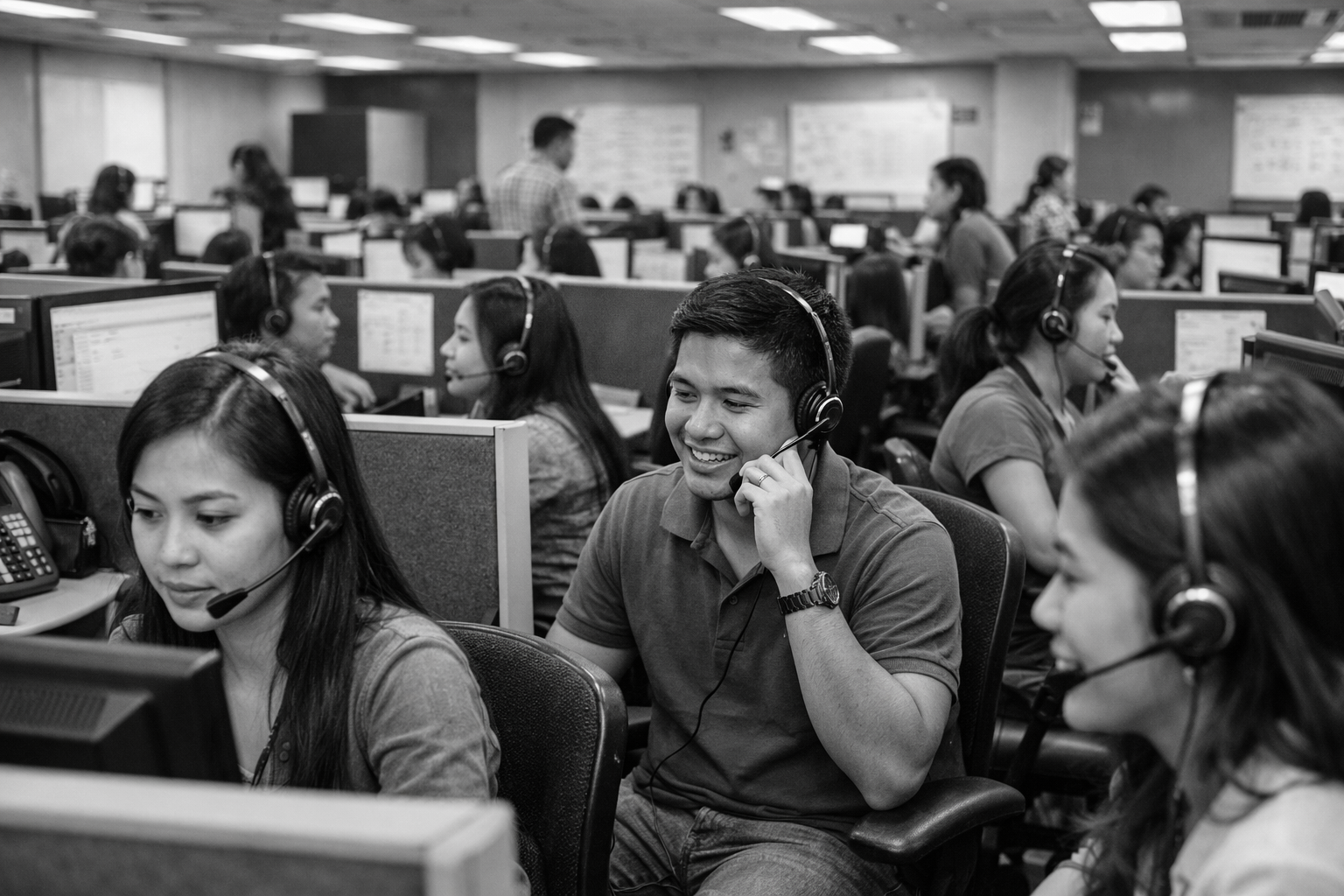
But something else happens within the first 90 days—something that wasn't in the business case or ROI calculator. MSPs discover that their Filipino team members aren't just technically competent alternatives to domestic hires. They're often better suited for the specific demands of managed services work.
Not better at coding complex applications. Not better at architecting enterprise infrastructure. Better at the things that actually make MSPs successful: building client relationships, maintaining service consistency through varying workloads, adapting quickly to new client environments, showing up reliably day after day, and treating client problems like they're personal responsibilities rather than just tickets in a queue.
These qualities aren't accidents. They're expressions of deeply rooted cultural values that shape how Filipino professionals approach work. As Dean Van Ormer, TaskUs Senior Vice President for Southeast Asia, notes: "The Philippines has always been special, but what makes it attractive is the talent that the Philippines possesses... it's the employee, the makeup of the employee." He cites Filipino workforce English proficiency, work ethic, intelligence, and strong affinity to Western culture as defining traits that continue to attract multinational clients.
This isn't marketing hyperbole. It's observable reality confirmed by retention data: Filipino MSP technicians average 3-5 year tenure compared to 18-24 months for domestic helpdesk staff. It's validated by client satisfaction scores that often match or exceed domestic team performance. It's proven by MSPs who started with one offshore technician as a trial and now run 50-person Philippines-based teams because the model simply works better.
Understanding why Filipino IT professionals excel in MSP environments requires looking beyond technical certifications to the cultural values and historical context that shape Filipino work culture. As our comprehensive guide to working with Philippine remote staff explores, these cultural factors create competitive advantages that cannot be replicated simply by hiring from other low-cost markets.
The Foundation: Cultural Values That Shape Exceptional Performance
Filipino work culture is built on interconnected values that, when understood, explain why Filipino professionals fit MSP environments so naturally.
Kapwa: The Foundation of Shared Humanity
Kapwa (pronounced kahp-wah) is arguably the most foundational Filipino value, often described as "shared self" or "shared inner being." It translates roughly to seeing others as extensions of yourself—a profound sense of interconnectedness and shared humanity.
In an MSP context, this manifests as technicians who don't see client issues as abstract problems to solve but as challenges affecting real people they genuinely care about. A Filipino helpdesk technician doesn't think "this is ticket #4728 about email access." They think "Maria can't get to her emails and she needs help right now."
This isn't performative empathy taught in customer service training. It's a cultural instinct that runs so deep most Filipino professionals don't even recognize it as unusual. They're genuinely surprised when they learn that not all technicians experience client stress as their own stress.
Pakikisama: Harmony and Getting Along
Pakikisama (pah-kee-kee-sah-mah) emphasizes getting along with others, maintaining harmonious relationships, and being flexible to support the group's success. Derived from Kapwa, it shapes how Filipino professionals approach teamwork and client relationships.
For MSPs, this creates technicians who actively avoid conflict, find diplomatic ways to handle difficult clients, adjust their communication style to match client preferences, and prioritize team cohesion over individual recognition.
A Filipino technician facing an impatient client doesn't take it personally or respond defensively. Pakikisama guides them to stay calm, find common ground, and focus on resolving the issue rather than escalating emotional tension. As research on Filipino work culture notes, employees who prioritize Pakikisama "may go to great lengths to ensure positive working relationships, avoid confrontation, and ensure colleagues feel respected."
Utang na Loob: The Debt of Gratitude
Utang na loob (oo-tahng nah loh-ohb) roughly translates to "debt of gratitude," but in professional contexts, it's better understood as reciprocal loyalty and mutual respect. It creates a sense that good treatment deserves good treatment in return.
When MSPs invest in training Filipino technicians, provide good working conditions, and treat them with respect, Utang na loob creates deep loyalty that manifests as long tenure and genuine commitment to the company's success. This explains why Filipino BPO professionals show dramatically lower turnover than workers in other outsourcing destinations.
According to industry data, Filipino professionals tend to stay with companies that provide stability and growth, viewing their jobs as ways to support families rather than temporary stepping stones. As one analysis notes, "Filipinos view their jobs as a way to support their families and are more inclined to stay with companies that provide stability and growth."
This isn't about obligation—it's about honor and integrity. Filipino professionals take pride in being loyal to organizations that treat them well.
Hiya: Modesty and Preserving Dignity
Hiya (hee-yah) is a complex value often translated as "shame" or "modesty," but in professional contexts, it relates to the desire to avoid embarrassing oneself or others. It creates a strong motivation to do good work and avoid letting people down.
For MSPs, this manifests as technicians who take ownership of mistakes rather than deflecting blame, go to great lengths to avoid disappointing clients or colleagues, work hard to ensure their performance reflects well on the team, and are genuinely bothered by poor service quality in a way that drives continuous improvement.
The concept of "saving face" means Filipino professionals respond better to private, constructive feedback than public criticism. But it also means they internalize quality standards deeply—doing poor work creates personal shame that drives them to improve without external pressure.
Bayanihan: Community Spirit and Collaborative Effort
Bayanihan (bah-yah-nee-hahn) represents the Filipino spirit of communal unity and cooperation. Historically, it referred to neighbors literally lifting someone's house and carrying it to a new location—everyone working together for the community's benefit.
In modern MSP operations, Bayanihan creates technicians who naturally help colleagues without being asked, share knowledge freely without territoriality, volunteer for difficult tasks when the team needs support, and celebrate team successes more than individual achievements.
This collaborative spirit makes Filipino teams exceptionally good at knowledge sharing and peer support—critical capabilities for MSPs where no single technician can know everything but the team collectively must solve all problems.
How Cultural Values Translate to MSP Excellence
These aren't just nice cultural traits. They create specific operational advantages that directly impact MSP performance.
| Cultural Value | MSP Advantage Created | Observable Impact |
|---|---|---|
| Kapwa (Shared Humanity) | Genuine empathy in client interactions | Higher CSAT scores, clients feel "heard" |
| Pakikisama (Harmony) | De-escalation skills with difficult clients | Fewer escalated complaints, smoother resolutions |
| Utang na Loob (Loyalty) | Long-term retention, low turnover | 3-5 year average tenure vs. 18-24 months domestic |
| Hiya (Dignity/Pride) | Intrinsic quality motivation | Consistent performance without micromanagement |
| Bayanihan (Collaboration) | Knowledge sharing, peer support | Faster onboarding, better team problem-solving |
The Service Orientation Advantage
Filipino culture has what researchers call a "natural service orientation"—a genuine inclination toward helping others that goes beyond professional training. This stems from Filipino values of hospitality (a source of national pride), respect for guests and clients as honored positions, and genuine warmth in interpersonal interactions.
According to research on Filipino BPO professionals, this "service orientation has significantly contributed to the Philippines' prominence in customer service and business process outsourcing industries. The combination of service excellence, English language proficiency, and cultural adaptability positions Filipino professionals as valuable assets in roles requiring cross-cultural customer engagement."
For MSPs, this creates technicians who naturally excel at client-facing support. They don't just tolerate customer service—they genuinely enjoy helping people solve problems. This isn't universal in IT. Many technically skilled professionals see client interaction as an annoying interruption to "real work." Filipino IT professionals tend to view client interaction as the purpose of their work.
The "Going the Extra Mile" Reality
One pattern consistently emerges in MSPs using Filipino teams: technicians regularly go beyond assigned responsibilities without being asked. This isn't because they're being exploited or don't understand boundaries. It's because Filipino work culture views excellence as a matter of personal integrity.
As one analysis notes, "Filipinos take pride in doing their jobs well. Hard work, dependability, and professional courtesy are deeply ingrained values... Filipino employees tend to go beyond assigned tasks to deliver excellence. Work is seen as a reflection of personal integrity and family honor."
For many Filipino professionals, work is not just a career—it's a way to support entire circles of people they love. Unlike Western cultures that focus primarily on nuclear families, Filipinos grow up in large, interconnected family systems where responsibilities extend far beyond parents and siblings. This creates profound motivation: "This job is my chance to build something better."
A Filipino helpdesk technician isn't just resolving tickets. They're supporting parents, siblings, nieces and nephews, sometimes extended family. That sense of responsibility becomes fuel. They show up not because they fear discipline but because people are depending on them.
Adaptability: The Undervalued MSP Requirement
MSP work requires constant adaptation: new client environments weekly, different technology stacks per account, varying communication styles and preferences, shifting priorities and emergency situations, and technology changes requiring continuous learning.
This isn't consulting work where you specialize deeply in one area. It's generalist work requiring breadth, flexibility, and the ability to context-switch rapidly. Filipino professionals excel at this adaptive model.
Historical Context: Resilience Through Adversity
Filipino adaptability isn't abstract—it's forged through lived experience. The Philippines faces regular typhoons, earthquakes, and natural disasters. The economy has weathered multiple crises requiring creative problem-solving. Cultural history includes Spanish colonization, American influence, Japanese occupation, and independence—creating unique ability to navigate different cultural frameworks.
As research notes, "Filipinos have developed adaptability and resilience in response to natural disasters and economic shifts. This ability to think quickly under pressure makes them well-suited for the fast-paced BPO industry. Whether adjusting to sudden process changes, handling demanding customers, or working night shifts to support global clients, Filipino professionals remain productive and solution-oriented."
This isn't theoretical resilience—it's practical capacity to remain effective under pressure and uncertainty.
Cultural Fluency and Western Affinity
Filipino professionals can uniquely adapt to Western culture while embracing their own Asian identity. This cultural fluency stems from long interaction between Oriental and Western countries and societies, decades of American influence on education and media, and English as a co-official language and medium of instruction.
They engage regularly with international business practices, allowing them to develop strong cross-cultural communication skills. As one industry analysis notes, "their respect for diversity fosters an inclusive and collaborative work environment where ideas and perspectives from various cultural backgrounds are valued. Cultural fluency contributes to their effectiveness in cross-cultural settings."
For North American and Australian MSPs, this creates seamless integration. Filipino technicians understand Western business norms instinctively—punctuality expectations, directness in professional contexts, documentation standards, and client service expectations—while bringing valuable cultural perspective from their own background.
The Retention Advantage: Why Filipino Technicians Stay
MSP economics are brutally impacted by turnover. The average cost to replace a departed technician is $12,000. When turnover hits 40% annually (common for domestic helpdesk roles), this creates constant recruitment costs, perpetual training burden, client relationship disruption, and knowledge loss.
Filipino professionals show dramatically better retention—typically 3-5 year average tenure compared to 18-24 months for domestic MSP staff. Why?
Career Perspective Differences
For many domestic helpdesk technicians, MSP work is a stepping stone to specialized roles paying 30-40% more. They're actively job hunting while employed, viewing their current role as temporary. As our MSP staffing crisis analysis details, 42% of IT professionals globally are actively looking for new jobs.
Filipino professionals view international MSP roles differently. Working for a North American or Australian company represents opportunity their parents often couldn't access—stable employment with professional development, ability to support extended family, and pride in being selected for international work.
According to research, "for many Filipinos, especially those working remotely for global clients or onsite abroad, the job they have now is something their parents or grandparents could only dream of. The opportunity itself feels like a blessing—earned but also fortunate. That sense of gratitude becomes fuel."
This isn't about limited options—skilled Filipino IT professionals have many choices. It's about perspective. When you view your role as transformational opportunity rather than transactional employment, you approach it differently.
The Generational Responsibility Factor
Many Filipino professionals are first-generation professionals from families that survived poverty, natural disasters, or unstable economies. As one powerful analysis notes, "their parents may have worked in fields, markets, factories, or overseas jobs without benefits or certainty. Every Filipino worker knows this story intimately: 'This job is my chance to build something better.'"
Behind every Filipino worker is a network of people hoping, depending, praying, and building a better future alongside them. This creates profound commitment that manifests as loyalty, dedication, and long-term thinking about employment relationships.
When an MSP invests in training a Filipino technician, provides stable work, and offers growth opportunities, that investment is recognized and valued. Utang na loob (reciprocal loyalty) creates genuine commitment in return.
The English Proficiency Foundation
Technical skills and cultural fit only matter if communication works. This is where the Philippines' unique position as the world's third-largest English-speaking nation creates advantage.
English is a co-official language in the Philippines and the medium of instruction throughout education. Filipino professionals don't just speak English—they think, troubleshoot, and document in English from childhood. Over 55% of the population has fluency, with even higher rates among college-educated professionals.
But more than proficiency, Filipino English has near-neutral accents with minimal idioms or localisms that confuse international clients. Decades of serving Western customers have honed communication skills specifically for business contexts.
As TaskUs executives note, Filipino workforce "English proficiency, work ethic, intelligence, and strong affinity to Western culture" are defining traits that continue to attract multinational clients. The Philippines consistently ranks high in English proficiency in Asia according to the EF English Proficiency Index.
For MSPs, this creates technicians who can handle client-facing support without communication barriers—a critical distinction from other low-cost markets where language limitations restrict offshore teams to backend work only.
Our detailed analysis of Philippine English proficiency explores why this matters specifically for client-facing IT support roles.
Real-World MSP Applications
These cultural advantages aren't theoretical. They manifest in specific MSP operational benefits.
Client Relationship Management
Filipino technicians excel at building rapport with end users—the office managers, accountants, attorneys, and other professionals who create tickets. They remember names and preferences, follow up proactively on past issues, communicate with warmth while maintaining professionalism, and make clients feel valued rather than just serviced.
This creates the intangible client satisfaction that drives MSP retention and referrals. Clients don't just tolerate their MSP's support—they actively appreciate it.
Consistent Performance Under Varying Load
MSP workload varies significantly: busy Mondays, quiet Fridays, month-end crunches, seasonal fluctuations, and unexpected crises requiring all-hands response. Filipino professionals handle this variability well because their work ethic isn't clock-watching transactional effort.
They show up and deliver consistent quality regardless of whether it's a slow Tuesday or a chaotic system outage requiring overtime. As research notes, "work ethic is personal integrity in action" for Filipino professionals—they take pride in showing up reliably.
Knowledge Sharing and Documentation
The Bayanihan spirit (communal cooperation) creates natural knowledge-sharing culture. Filipino technicians document solutions, update runbooks, and help colleagues without viewing it as "not my job." This collective approach builds institutional knowledge rather than creating silos of expertise.
For MSPs, this accelerates new technician onboarding and ensures knowledge doesn't walk out the door when someone eventually leaves. The remote onboarding practices we recommend leverage this cultural inclination toward collaborative learning.
Handling Difficult Client Situations
Pakikisama (harmony) and Hiya (preserving dignity) create technicians who excel at de-escalating tense situations. They don't take client frustration personally, find diplomatic ways to deliver bad news, maintain composure when clients are upset, and focus on solutions rather than blame.
This temperament is invaluable for MSP support where you're often the bearer of bad news about costs, timelines, or limitations.
The Integration Reality: Making It Work
Cultural advantages only deliver results when properly leveraged. MSPs that succeed with Filipino teams understand how to work with cultural values rather than against them.
Providing Clear Structure and Expectations
Filipino professionals value hierarchy and clear direction. Ambiguity creates stress because Hiya makes them hesitant to admit confusion. MSPs should provide detailed documentation of processes, clear escalation paths and approval authorities, specific performance expectations and KPIs, and regular feedback (delivered privately and constructively).
This isn't micromanagement—it's providing the framework within which Filipino professionals thrive.
Building Personal Relationships
Western business culture often separates professional and personal relationships strictly. Filipino culture doesn't make that division as sharply. Taking genuine interest in team members' lives, recognizing important personal milestones (birthdays, family events), incorporating occasional informal interaction, and showing care for personal wellbeing creates the foundation for strong professional performance.
This investment in relationships pays dividends in loyalty and commitment.
Creating Safe Communication Channels
Pakikisama makes Filipino professionals reluctant to publicly disagree or raise concerns. MSPs should create opportunities for private feedback, encourage questions in one-on-one settings, explicitly invite concerns and suggestions, and reinforce that honest communication is valued and safe.
When Filipino technicians trust that candor won't create shame or conflict, they provide valuable insights.
Recognizing Cultural Celebrations
Understanding the Philippine calendar, respecting important holidays like Christmas (celebrated elaborately in the Philippines), and acknowledging cultural events shows respect that Filipino professionals appreciate deeply. As our guide to Philippine holidays and work calendar notes, this cultural awareness strengthens team cohesion.
The Bottom Line: Culture as Competitive Advantage
Filipino IT professionals don't just offer cost savings and English proficiency. They bring cultural values—Kapwa, Pakikisama, Utang na Loob, Hiya, and Bayanihan—that align remarkably well with what makes MSPs successful.
These values create technicians who genuinely care about client success, maintain harmonious working relationships, show exceptional loyalty and long tenure, take personal pride in work quality, collaborate naturally without territoriality, and handle the adaptive, client-facing nature of MSP work with grace.
As Dean Van Ormer noted, it's "the talent that the Philippines possesses... the makeup of the employee" that creates advantage. That makeup is cultural as much as technical.
MSPs competing in increasingly difficult markets—facing domestic staffing shortages, struggling with 24/7 coverage requirements, and managing slim profit margins—find that Filipino teams provide not just operational relief but genuine competitive advantage.
The technical skills can be found elsewhere. The cost savings exist in other markets. But the combination of cultural fit, service orientation, adaptability, and loyalty? That's distinctly Filipino—and it's why MSPs who implement offshore teams well rarely stop at one or two technicians. They scale because it works.
Ready to Experience the Filipino Advantage?
Konnect specializes in connecting MSPs with Filipino IT professionals who bring both technical expertise and the cultural values that make managed services successful.
What we provide:
Pre-screened professionals with MSP experience: Our team members understand ConnectWise, Autotask, Datto, and other common MSP platforms. They've been selected not just for technical skills but for cultural fit with North American and Australian business practices.
Cultural onboarding and integration support: We help you leverage Filipino cultural strengths while navigating communication differences. Our cultural intelligence framework ensures smooth team integration.
Long-term retention focus: We build employment relationships designed for 3-5 year tenure, not transactional staffing. Our approach aligns with Filipino values of loyalty and stability.
Complete HR and infrastructure management: We handle Philippine employment law, payroll, benefits, facilities, and compliance so you focus on service delivery.
Flexible engagement models: Whether you need one helpdesk technician or an entire NOC team, we scale to your requirements without long-term commitments.
Schedule a consultation to discuss how Filipino IT professionals can strengthen your MSP operations.
📅 Schedule a meeting: https://meet.brevo.com/konnectph
✉️ Email us: hello@konnect.ph
Let's talk about building teams where cultural values align with business success.
About the Author
Vilbert Fermin is the founder of Konnect, a remote staffing company connecting North American and Australian businesses with top Filipino talent. With deep expertise in IT support and remote team management, Vilbert helps MSPs access skilled technical professionals without the overhead of full-time domestic IT staff. His mission is to showcase Filipino excellence while helping businesses stay protected, productive, and competitive through strategic remote staffing.